Sponsored Ads

A City as a Work of Art
Two visions, one extraordinary canvas: Barrie Mowatt
brought international art into Vancouver’s everyday life. Now Marcello Dantas joins him to imagine the Vancouver Biennale’s
next chapter.
Story by: Harris Van Photos donated by: Vancouver Biennale
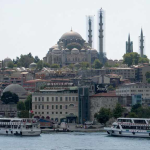
The history of the world’s great biennales is also a history of cities learning to see themselves differently. Venice began the modern tradition in 1895, eventually making its palazzos, canals, gardens and Arsenale (Arsenale di Venezia) inseparable from the experience of
the art. São Paulo followed in 1951, Sydney in 1973 and Istanbul in 1987, each developing an identity rooted in its own geography and culture. Their enduring lesson is that a biennale becomes truly significant when the city stops being merely its host and becomes part of its meaning.
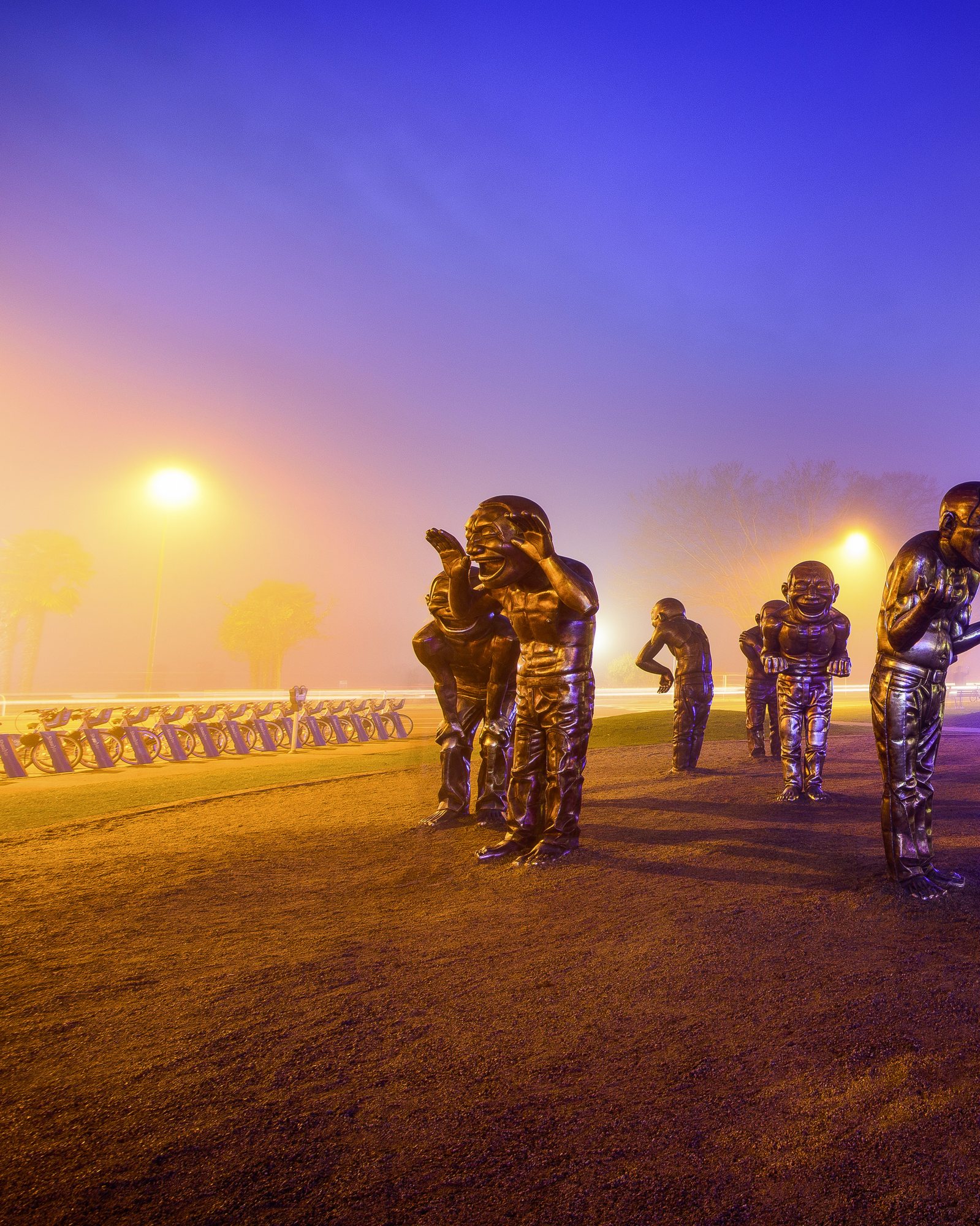
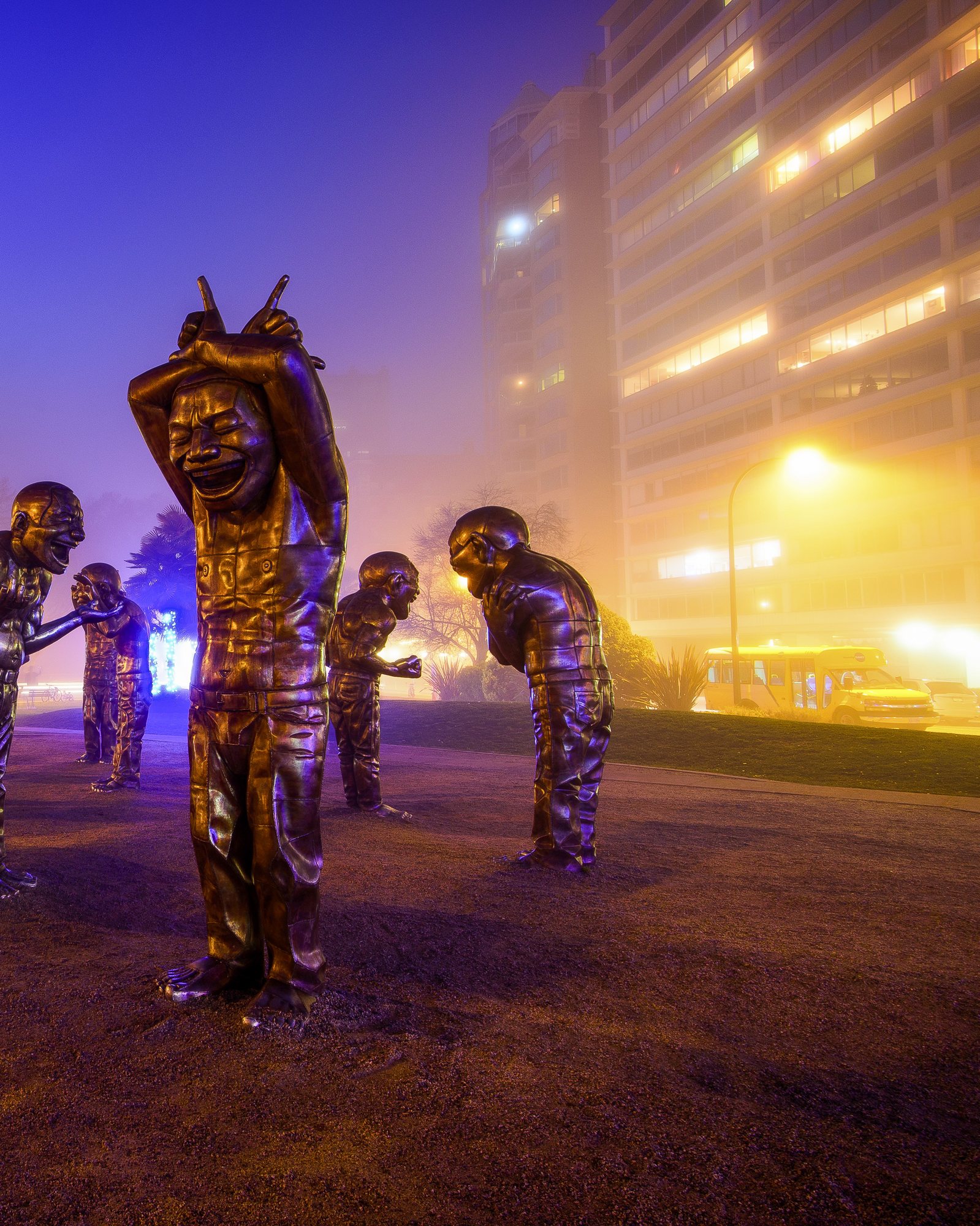
A-maze-ing Laughter Artist: Yue Minjun (b. 1962, China) Medium: 14 patinated cast-bronze figures
Dimensions: 259 cm (102 in) tall
Weight: 250 kg (551 lbs)
Location: Morton Park (Davie Street and Denman Street) at English Bay in Vancouver
“Instead of asking people to find the art, what if the art found them?”
Barrie Mowatt saw that possibility in Vancouver. The city already possessed what no curator could commission: mountains rising behind the skyline, the Pacific meeting beaches minutes from downtown and forests woven into the metropolitan landscape. What Vancouver was still developing was the cultural confidence to use those qualities not simply as scenery, but as part of its artistic identity.
In 1998, working with the Vancouver Park Board, international sculpture was brought into the public realm around English Bay. Suddenly contemporary art belonged as much to the family walking the Seawall as to the collector or critic. There was no admission, no threshold and no requirement to understand. There was simply the encounter.
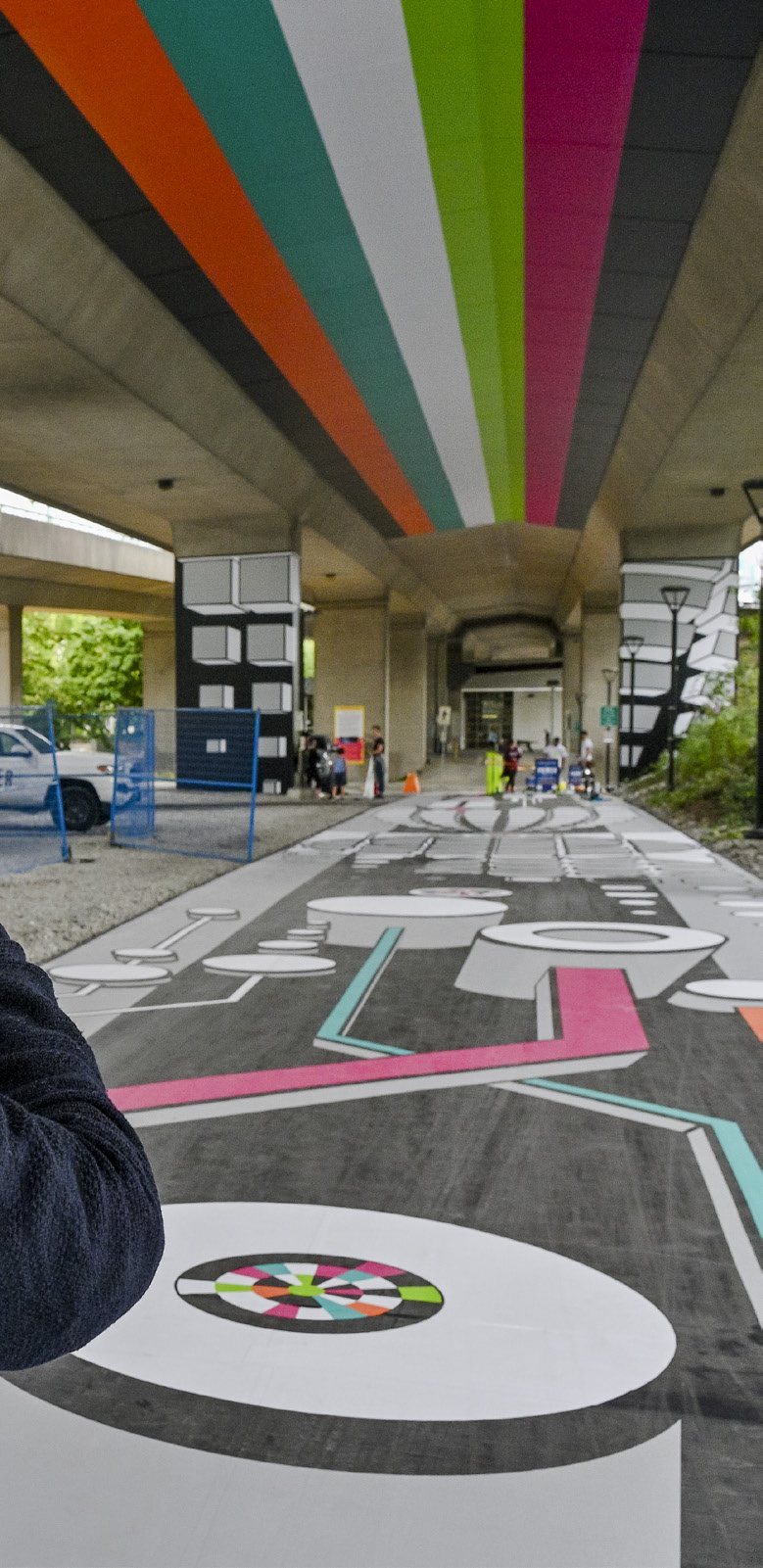
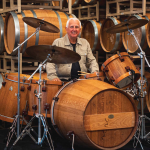
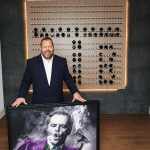
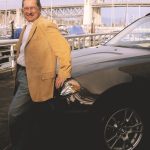
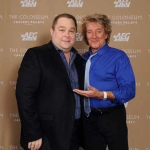
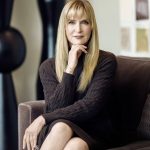
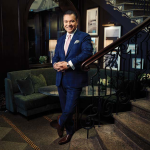
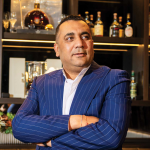
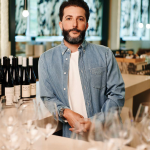
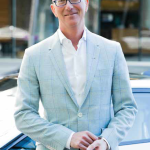
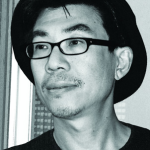
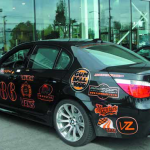
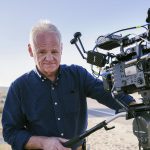
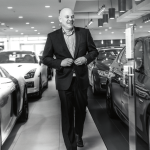
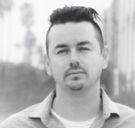
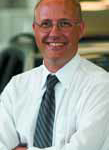
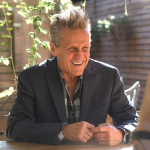
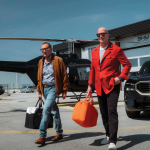
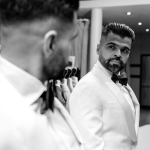
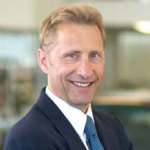
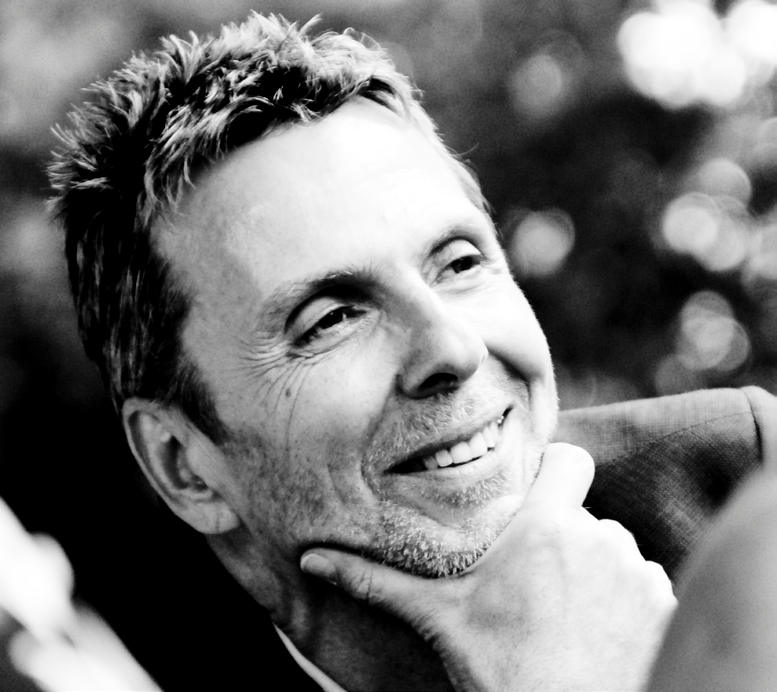
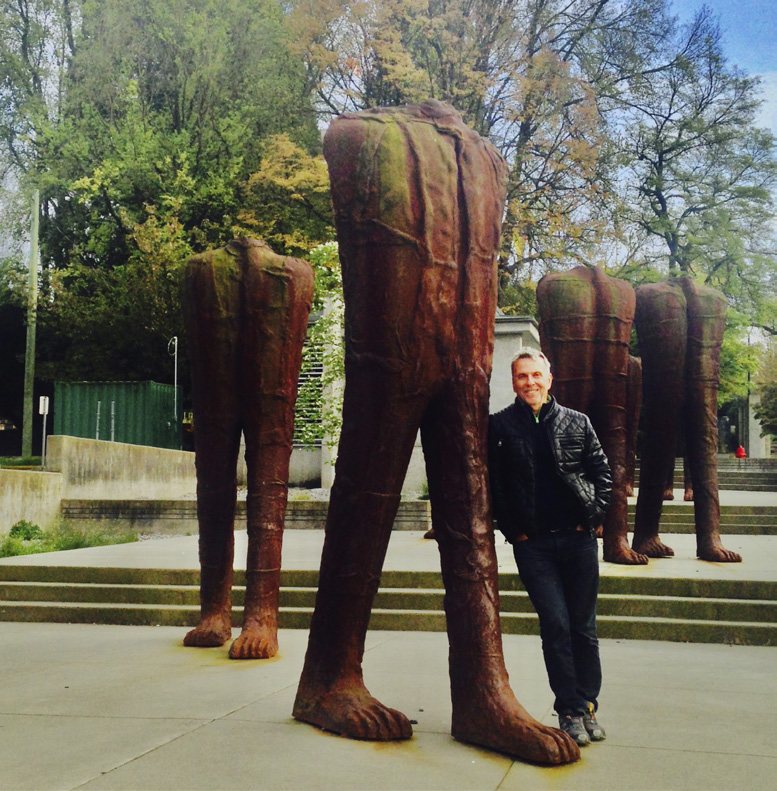
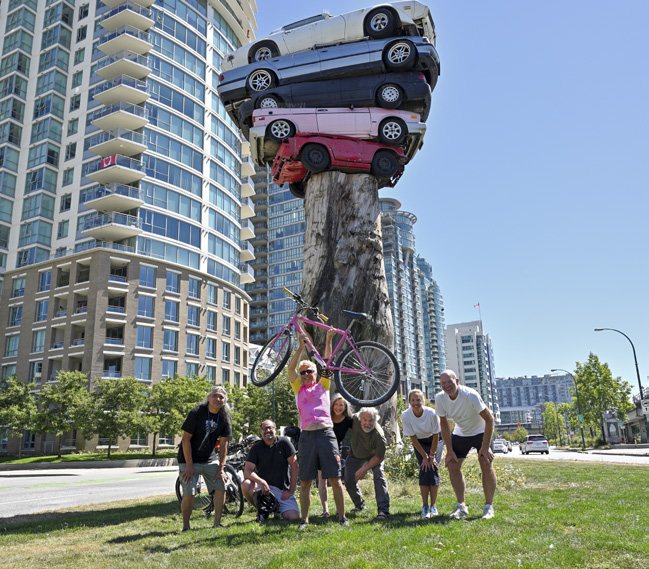
1, 2, 3. Barrie Mowatt; 4.Device to Root Out Evil – Dennis Oppenheim (USA, 2005—2007): Vancouver’s Harbour Green Park; 5.Trans Am Totem – Marcus Bowcott (Canada, 2015): Near Quebec Street and Milross Avenue; 6.Jaguar – John Henry (USA);
From that experiment grew the Vancouver Biennale and an increasingly ambitious interpretation of the open-air museum: art where people live, work, play and transit, free for everyone to experience. Sculpture was joined by installation, film, performance, new media, education and artist residencies. Artists including Yue Minjun, Ai Weiwei, OSGEMEOS, Vik Muniz, Dennis Oppenheim and Michel Goulet became part of a cultural conversation unfolding across parks, waterfronts, transit corridors and neighbourhoods.
Mowatt came to that idea after years on the other side of the gallery door. He established Buschlen Mowatt Fine Arts in 1979 and developed it into an internationally recognized gallery that operated until 2011. Yet galleries require an intentional encounter: people decide to go looking for art. Mowatt became fascinated by reversing that relationship.
Instead of asking people to find the art, what if the art found them?
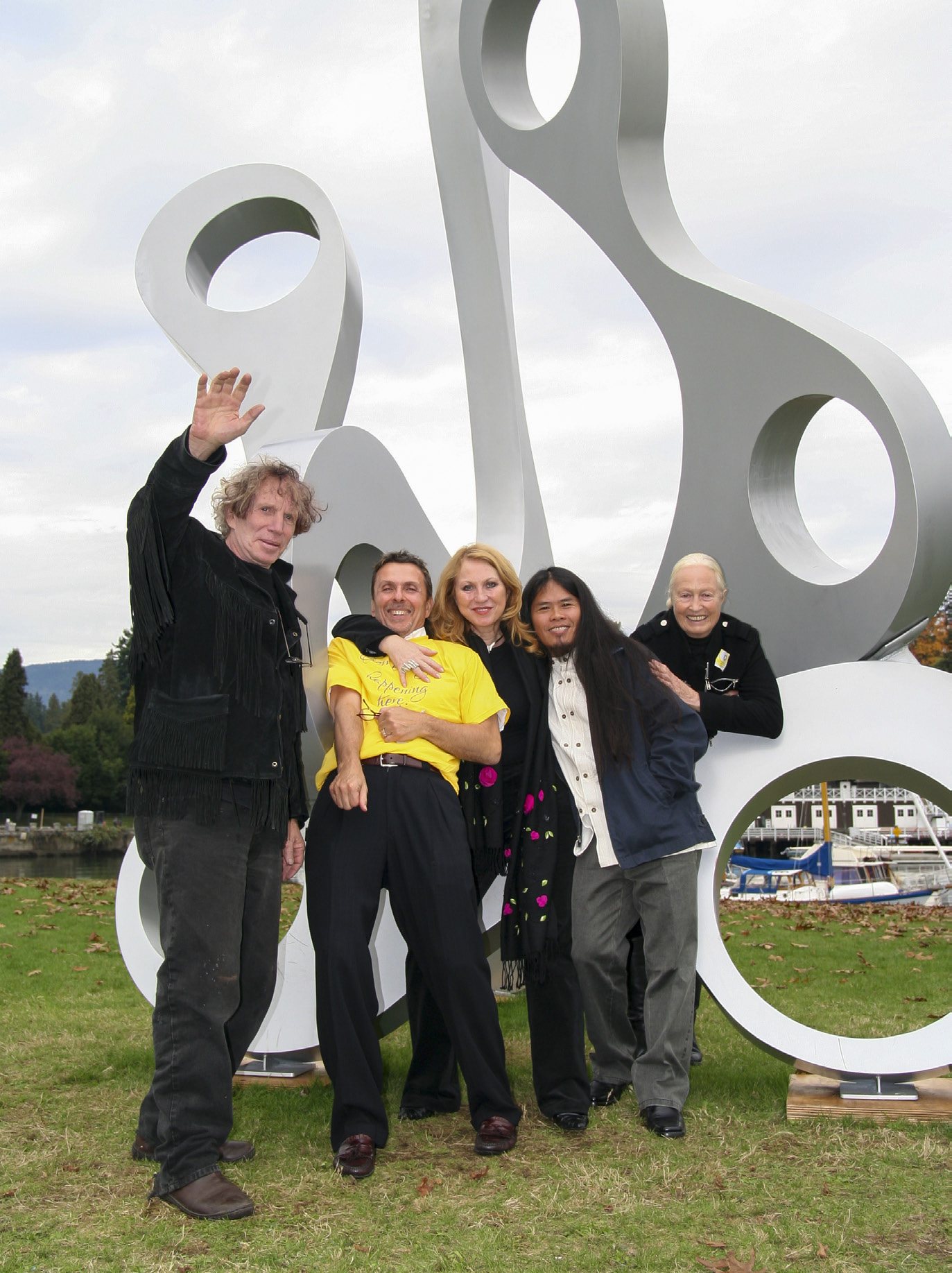
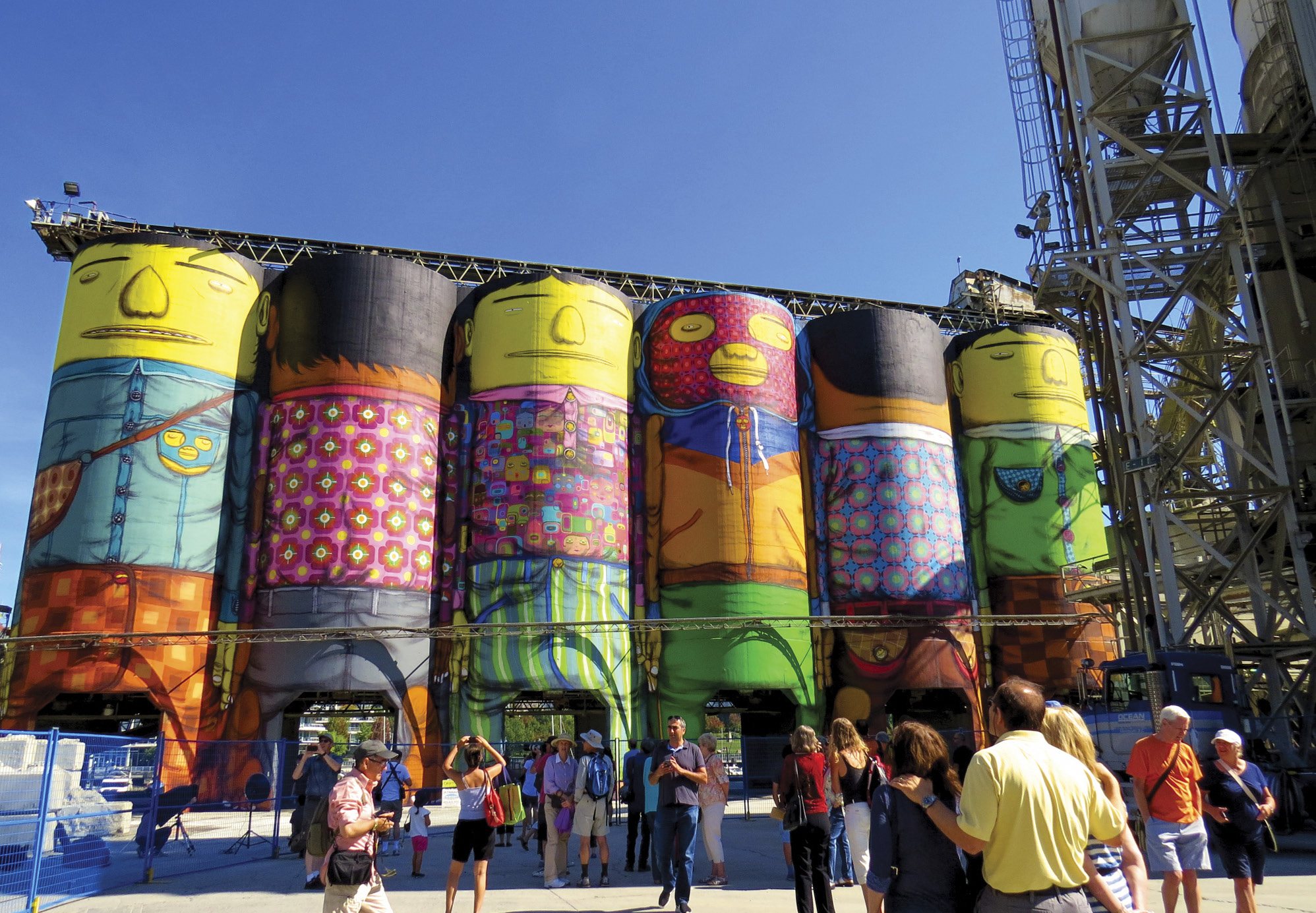
7.Giants – OSGEMEOS (Brazil, 2014): Twin artists Gustavo and Otávio Pandolfo transformed
Yue Minjun’s A-maze-ing Laughter at English Bay perhaps captures Mowatt’s philosophy best. Children weave between its 14 bronze figures, visitors imitate their enormous grins and Vancouverites use them as a familiar landmark. Behind them are ocean, mountains and sky. Move the figures elsewhere and they remain Yue Minjun’s art, but they would no longer be Vancouver’s Yue Minjun.
persistence, a philanthropist’s belief in access and a provocateur’s understanding that worthwhile art can sometimes make people uncomfortable.
Perhaps the greatest evidence of his success is that his original proposition no longer seems particularly radical. Vancouverites have grown accustomed to encountering ambitious art in unexpected places. Temporary works became memories; others became landmarks. Artists, students and communities became part of the Biennale’s history.
six Granville Island concrete silos into a
monumental mural;
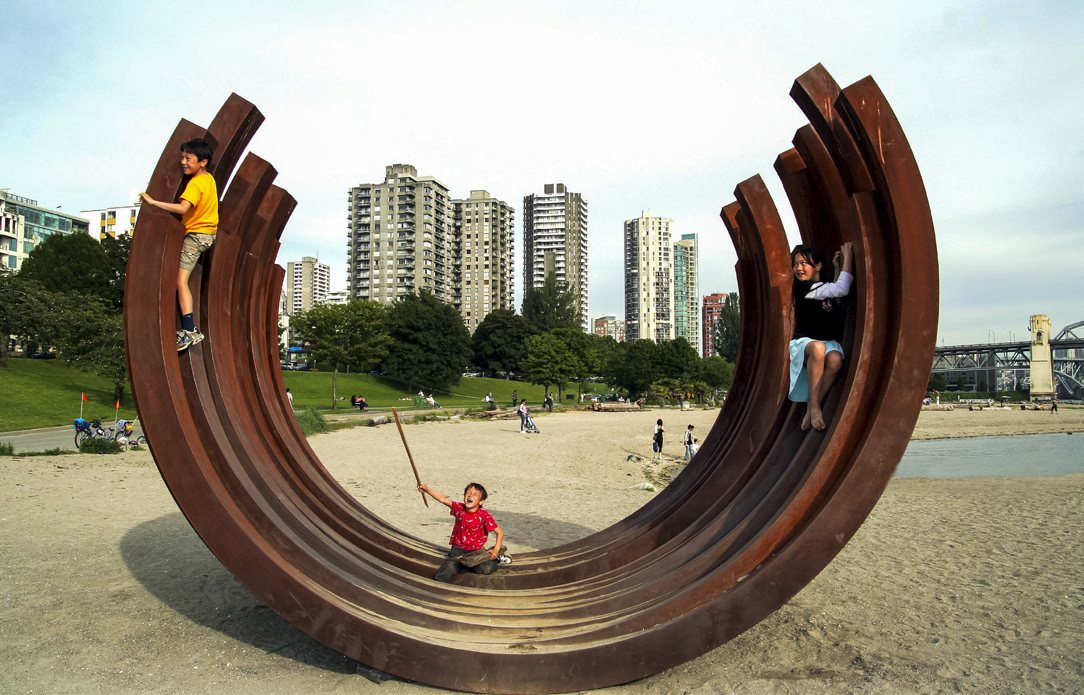
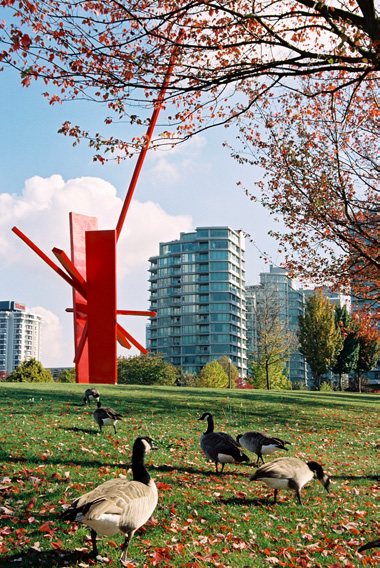
8.217.5 Arc x 13 – Benar Venet (France,
Barrie Mowatt didn’t simply bring international art to Vancouver; he allowed Vancouver to become part of the art.
2005—2007): Sunset Beach.
“A biennale becomes truly significant when the city stops being
merely its host and becomes part of its meaning.”
Such achievements required more than an eye for artists. Public art means governments, engineering, fundraising, neighbourhood interests and inevitable disagreement over what belongs in shared space. Mowatt has navigated that territory with a collector’s curiosity, an entrepreneur’s
Success, however, presents another challenge. Institutions can become so closely identified with their founders that protecting what worked begins to restrict what might come next. Mowatt’s response has been to trust the platform he created enough to invite another formidable imagination into it.
Sponsored Ads


MARCELLO DANTAS: THE NEXT VIEW
Marcello Dantas inherits an idea that has already proved itself. He doesn’t need to establish that Vancouver’s beaches, parks and neighbourhoods can become serious cultural spaces. Mowatt has spent more than a quarter-century doing that. As Senior Curator of the Vancouver Biennale, Dantas faces the more interesting question: how do you advance a successful idea without simply repeating it?
The Brazilian curator, filmmaker and cultural producer has built an international career exploring the boundaries between art, architecture, technology, landscape and human experience. His work has included major international exhibitions and, more recently, co-curating Desert X AlUla 2024 in Saudi Arabia and serving as art director of SFER IK in Tulum, Mexico—places where environment isn’t background to the art but part of its meaning.
Marcello Dantas doesn’t inherit a blank canvas. He inherits one layered with landscape, culture, history and more than 25 years of ambition.
Importantly, Dantas already knows this canvas. He worked with the Vancouver Biennale more than a
“Marcello Dantas doesn’t inherit a blank canvas. He inherits one layered with
landscape, culture, history and more than 25 years of ambition.”
decade ago and in 2014 curated its International Pavilion, inviting eight emerging Brazilian artists to transform an industrial workshop into a collaborative arts project. That same period produced Vik Muniz’s remarkable Untitled (Wolf) in Squamish, a 30-by-17-metre image created from rocks, logs and wood chips with First Nations groups and the local community. Nature gradually reclaimed it, exactly as intended.
darkness or human participation. In Vancouver, where nature stubbornly refuses to remain in the background, those possibilities are compelling.
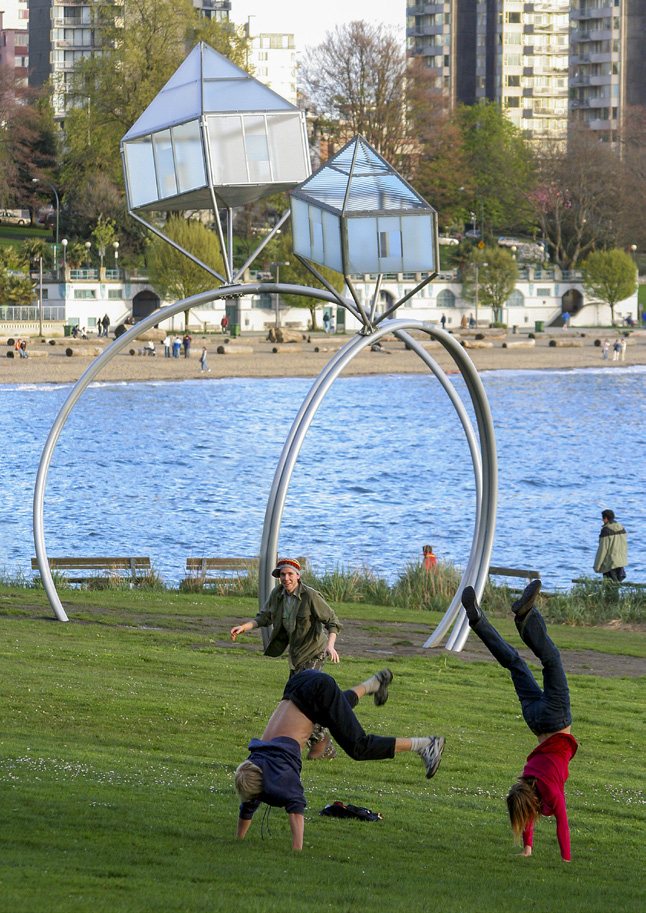
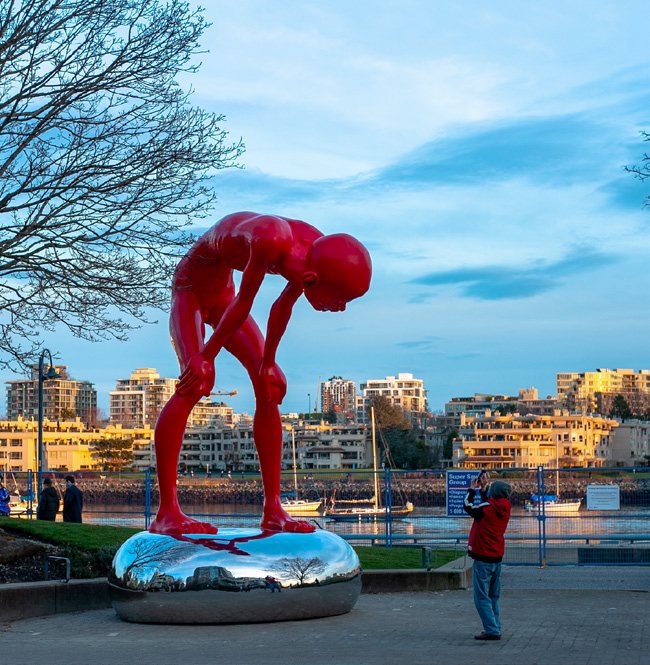
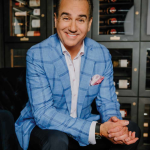
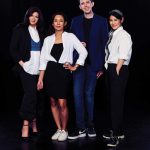
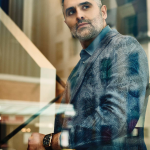
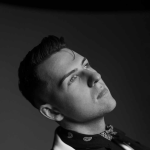
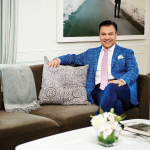
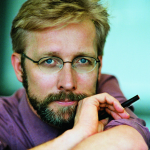
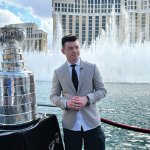
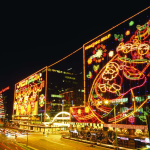
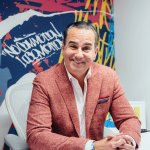
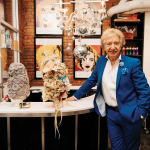
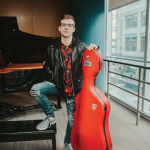
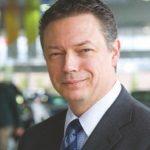
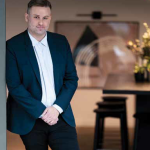
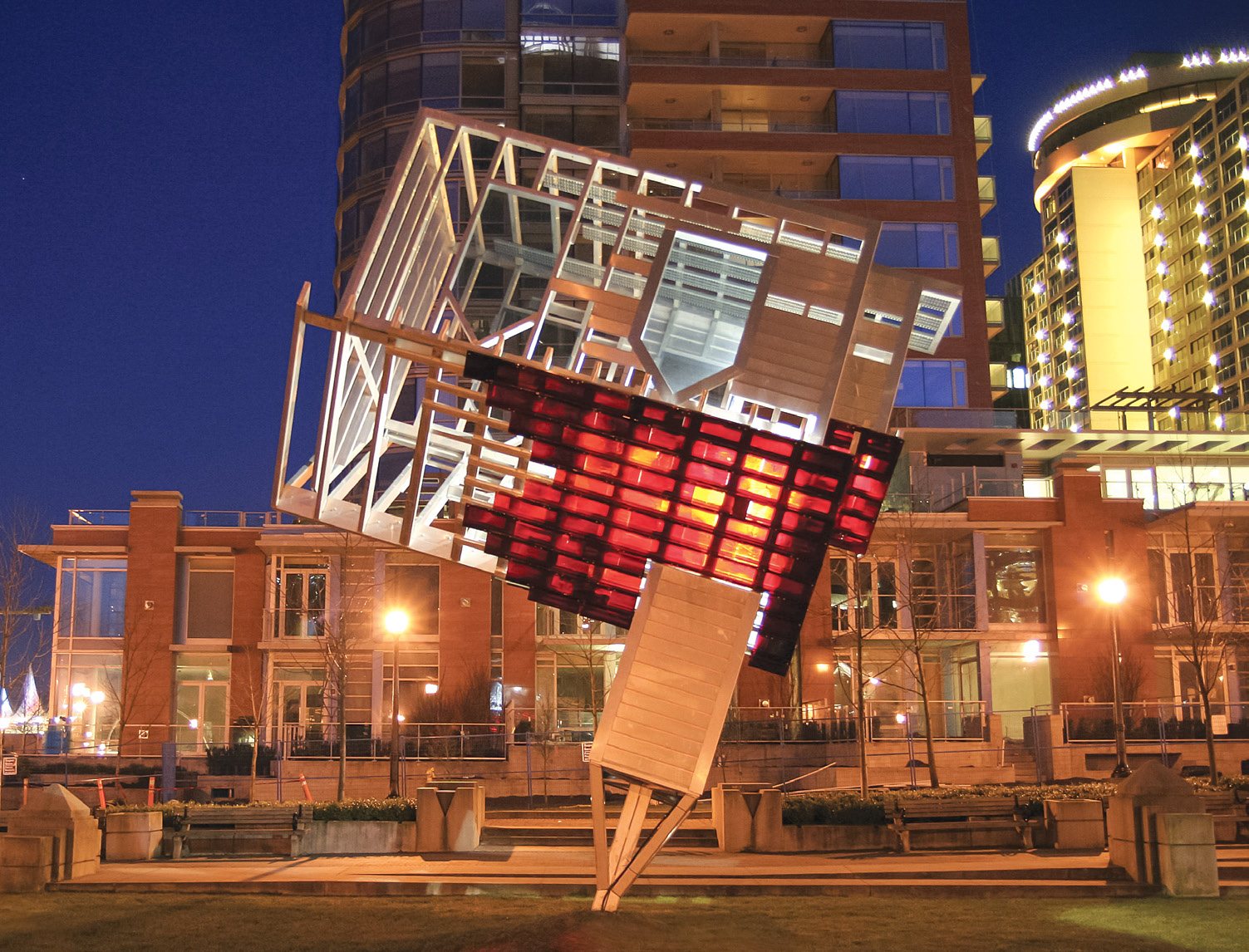
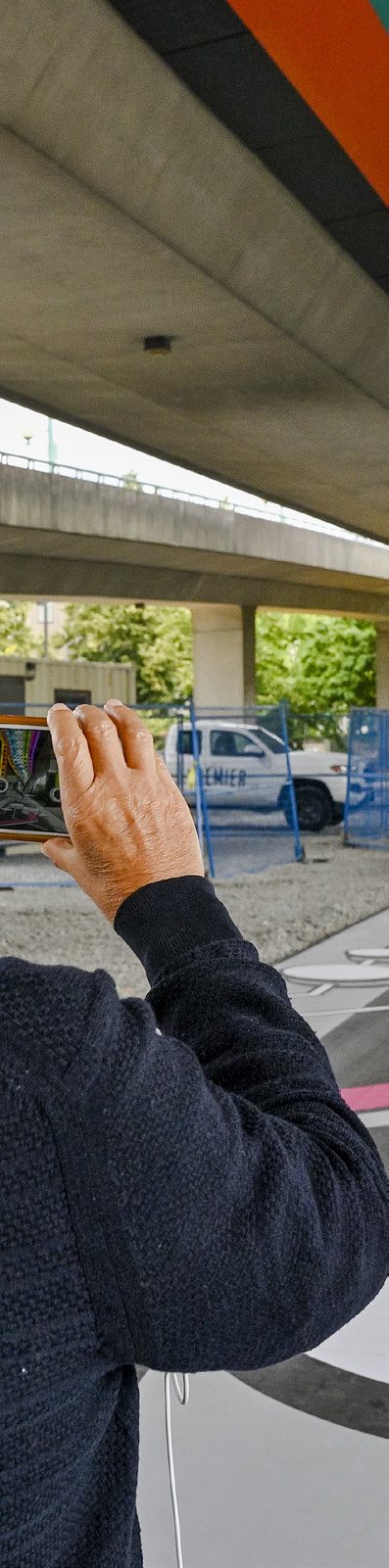
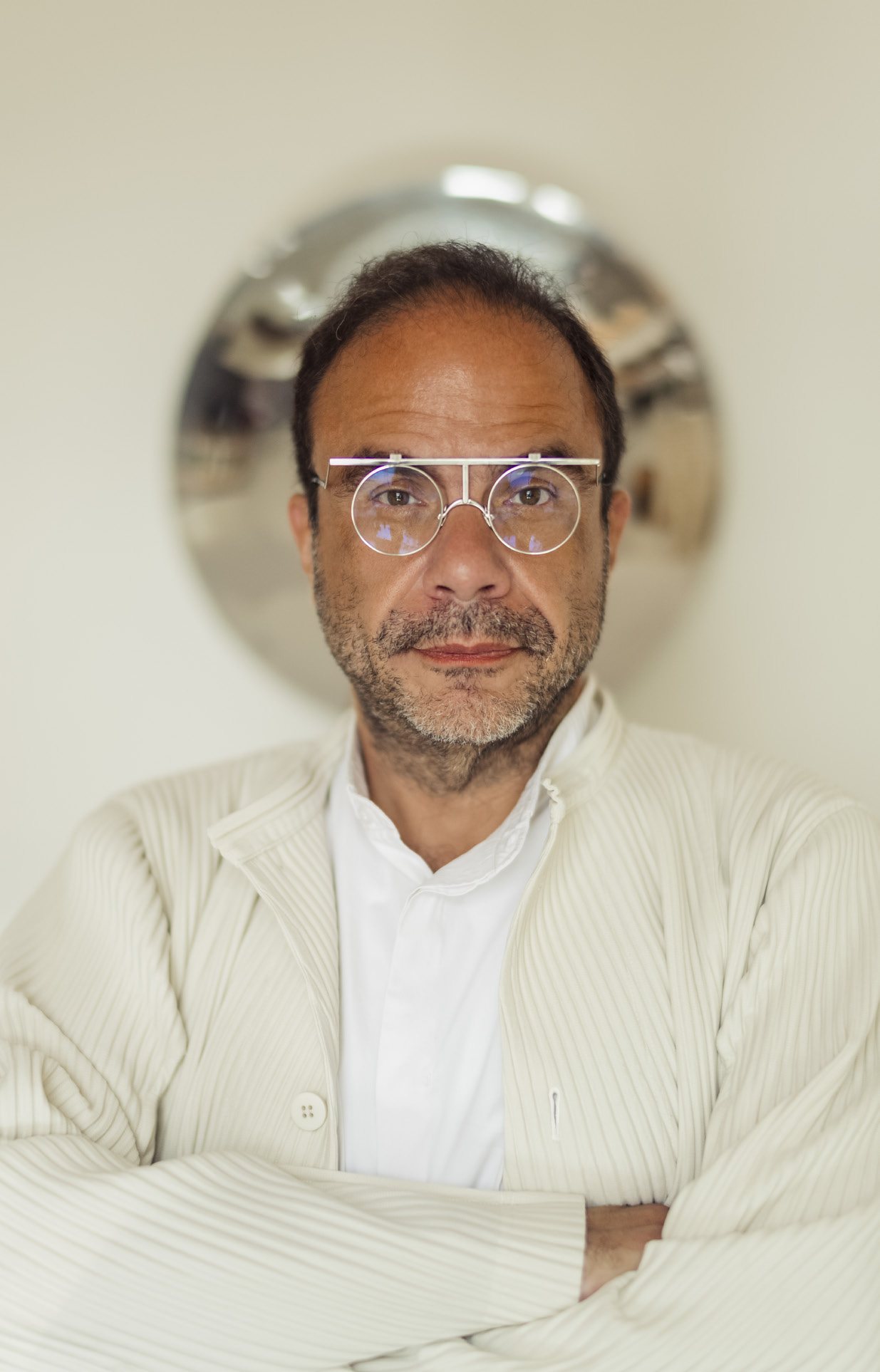
Marcello Dantas. 1.Voxel Bridge – Jessica Angel (Columbia/USA, 2021); 2.Proud Youth – Chen Wenling (China, 2021): On waterfront; 3.Engagement – Dennis Oppenheim (USA, 2005-2007): Two monumental engagement rings topped with illuminated houses;
Yet Vancouver isn’t an empty landscape waiting for an international curator to provide cultural meaning. Any serious conversation begins with the Indigenous peoples whose territories, knowledge and artistic traditions long predate the modern city. Around that foundation has grown a diverse creative community expressed through visual art, architecture, film, music, dance, design, technology, food and performance.
That history offers a glimpse of what Dantas brings to Vancouver. Public art need not always be a monument placed permanently on a pedestal. It can be temporary, immersive, digital, performative or responsive; it can change with weather, water,
The opportunity, therefore, is exchange rather than simply importation: international artists
5 3
4.Freezing Water
encountering Vancouver artists, contemporary practice engaging meaningfully with Indigenous knowledge, and galleries, schools, neighbourhoods and cultural organizations becoming participants rather than spectators.
and brings that perspective back. One understands what it took to build the platform; the other has been invited to explore what else it might become.
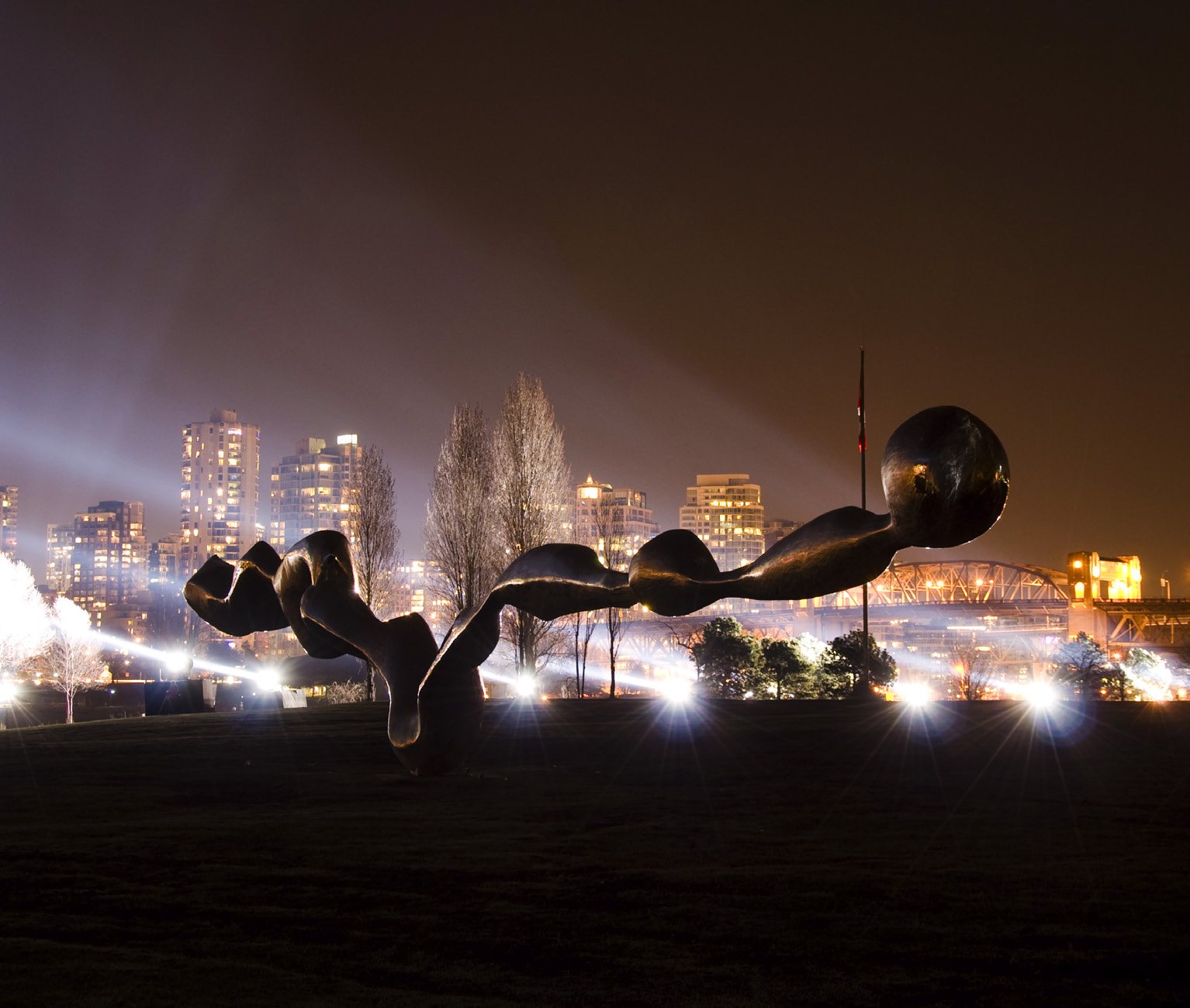
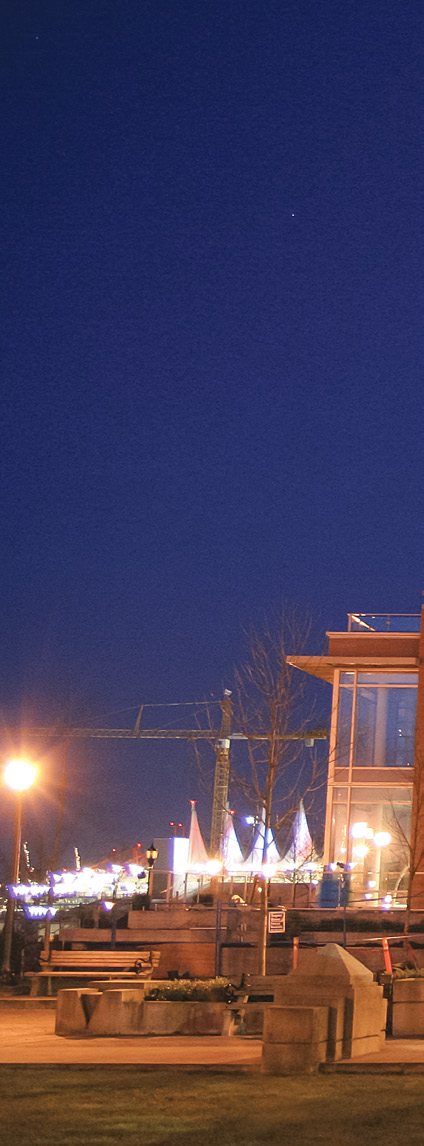
#7 – Ren Jun (China,
2009-2011) Vanier Park at night;
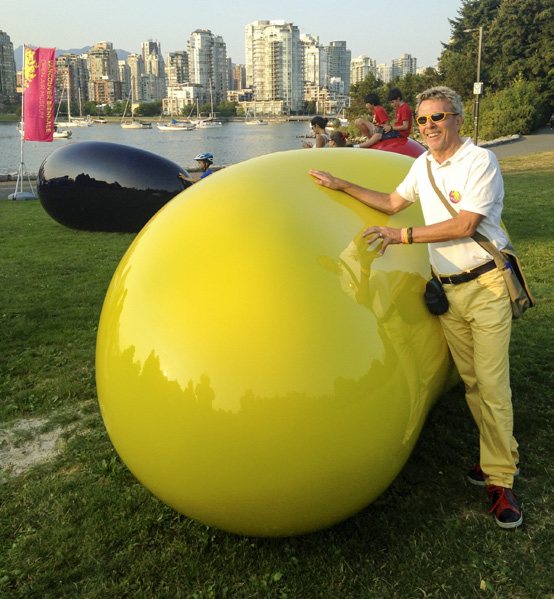
5.Love Your Bean
This isn’t a passing of the torch so much as the lighting of another one. Mowatt carries the history, relationships and persistence that built the Biennale. Dantas brings another eye and another vocabulary. The promise lies in the conversation between them.
– Cosimo Cavallaro (Canada, 2014-1016):
The world’s great biennales succeed because they could happen nowhere else. Vancouver’s opportunity is exactly the same.
Charleson Park;
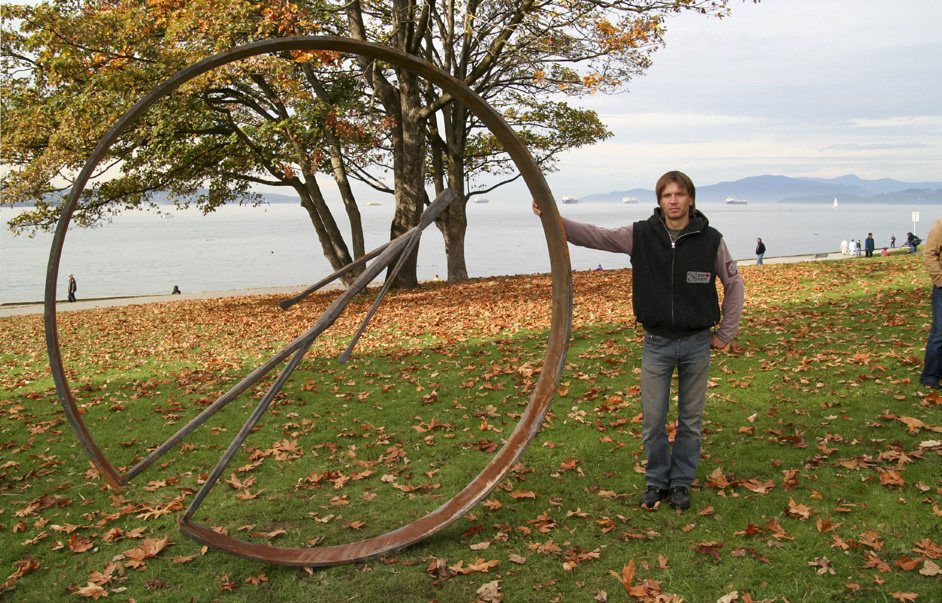
6.Figures in Circle x 3 – Markus Schaller (Germany,
Venice succeeds because nowhere else can be Venice. Sydney is shaped by its harbour and Asia- Pacific position; Istanbul by its place between continents. Vancouver’s ambition shouldn’t be to imitate them, but to recognize that its own landscape, people and cultural complexity are precisely what distinguish it.
The next great Vancouver Biennale will not simply bring the world to Vancouver. It will put Vancouver into conversation with the world.
2005-2007): Near English Bay.
Barrie Mowatt spent more than a quarter-century establishing the canvas. Marcello Dantas has been invited to look at it differently. Vancouver no longer needs to ask whether it belongs in the international cultural conversation.
That is where Mowatt and Dantas meet. Mowatt’s journey began in Vancouver and reached outward, bringing the international art world into the public life of his city. Dantas has travelled internationally
It needs to decide what it wants to say when the world is listening. T