Sponsored Ads






BEYOND the SKYLINE
The life, vision and legacy of Bob Rennie
Story by: Harrison Vander Photos by: Mohammad Alsaber
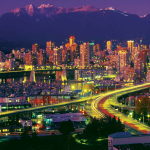
Cities are remembered by their skylines— the towers that define them, the neighbourhoods that reshape them and the architecture that comes to symbolize an era. But skylines rarely tell the whole story. Behind every changing city are people who recognize possibilities long before everyone else. For more than half a century, Vancouver has had one of those people in Bob Rennie.
and understanding incomes, and need. Long before False Creek and Coal Harbour became coveted addresses, Rennie understood that buyers were investing in more than homes. They were investing in neighbourhoods, confidence and the future itself. That insight shaped an extraordinary career, but it does not fully explain the man.
Before meeting Rennie, I had read the familiar biographies. They catalogued business success, landmark developments, philanthropy and one of Canada’s most significant private art collections. Yet they left unanswered the question that interested me most: How does Bob Rennie think?
His name has become inseparable from Vancouver’s transformation into one of North America’s most admired urban centres. As a marketer, strategist and advisor, he helped redefine not only how real estate was sold, but how it was imagined

Seeing possibilities before others did.
The answer emerged almost immediately. Our conversation moved easily from housing and economics to politics, education and contemporary art. The subjects changed, but the curiosity never did. Rennie has never separated business, culture and community. To him, they are connected by a single question: How do we leave a place better than we found it?
Years later, Vancouver Technical revisited his academic record and determined that he had already earned the credits required to graduate. By then, years of building a successful business and learning from life’s experiences had proved an invaluable education of their own.
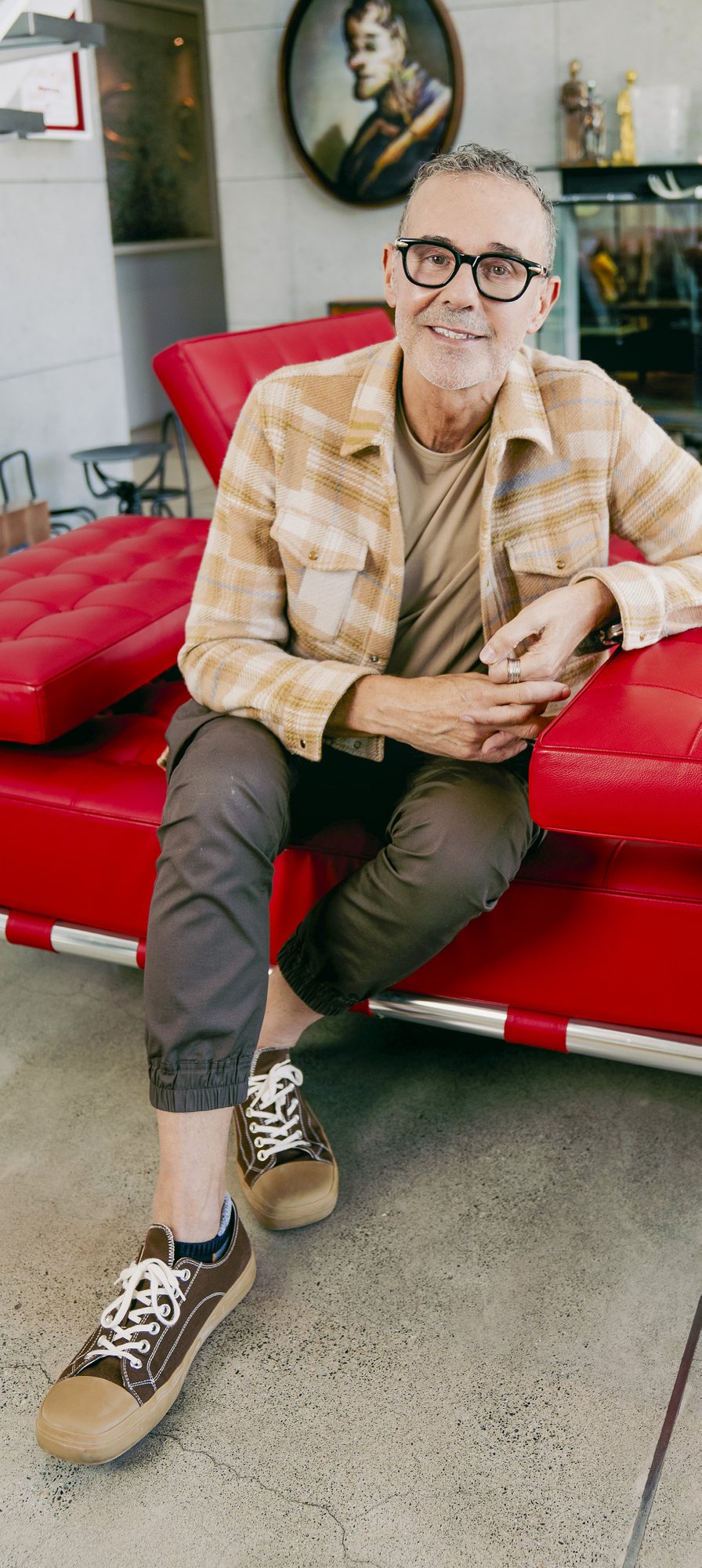
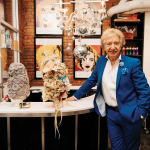
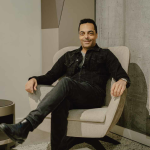
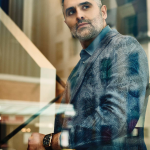
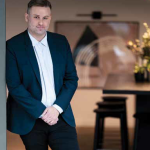
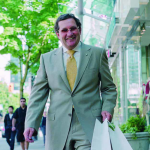
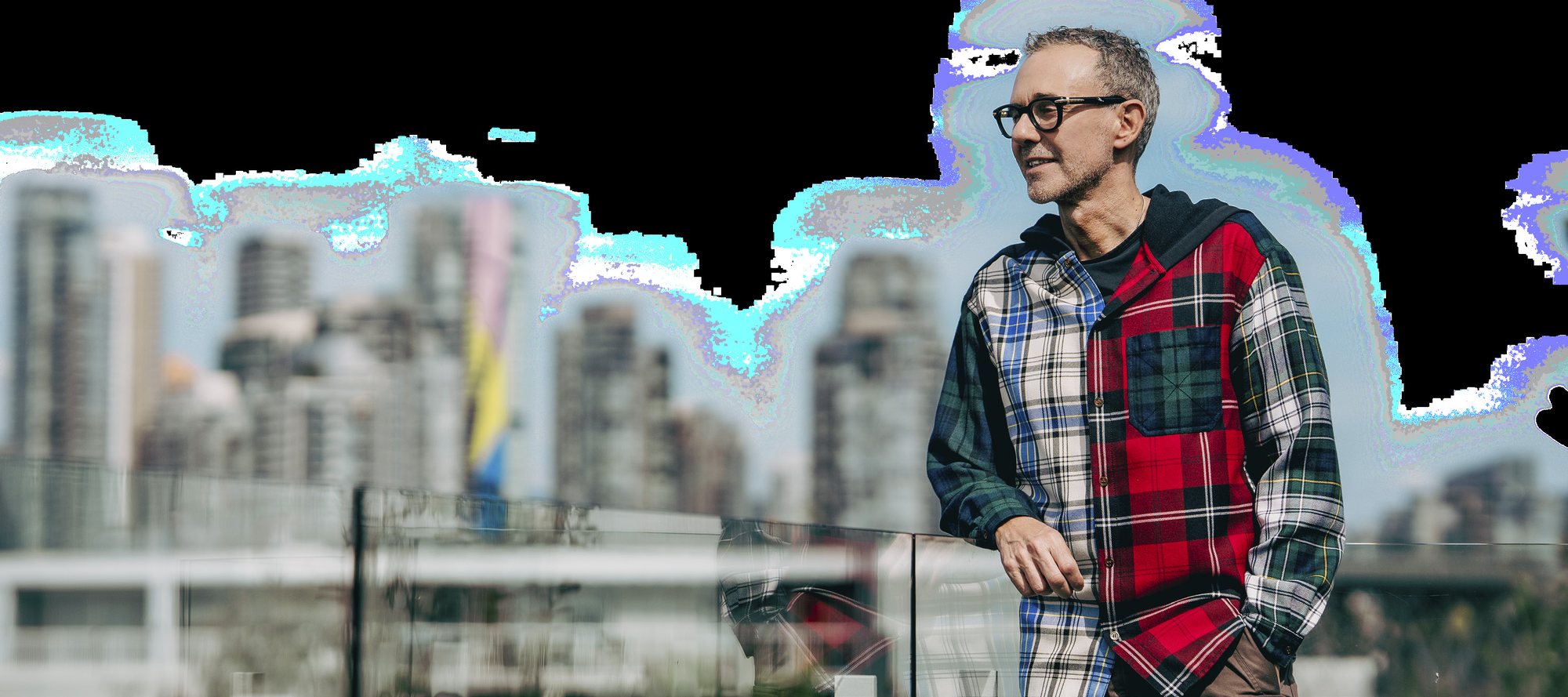
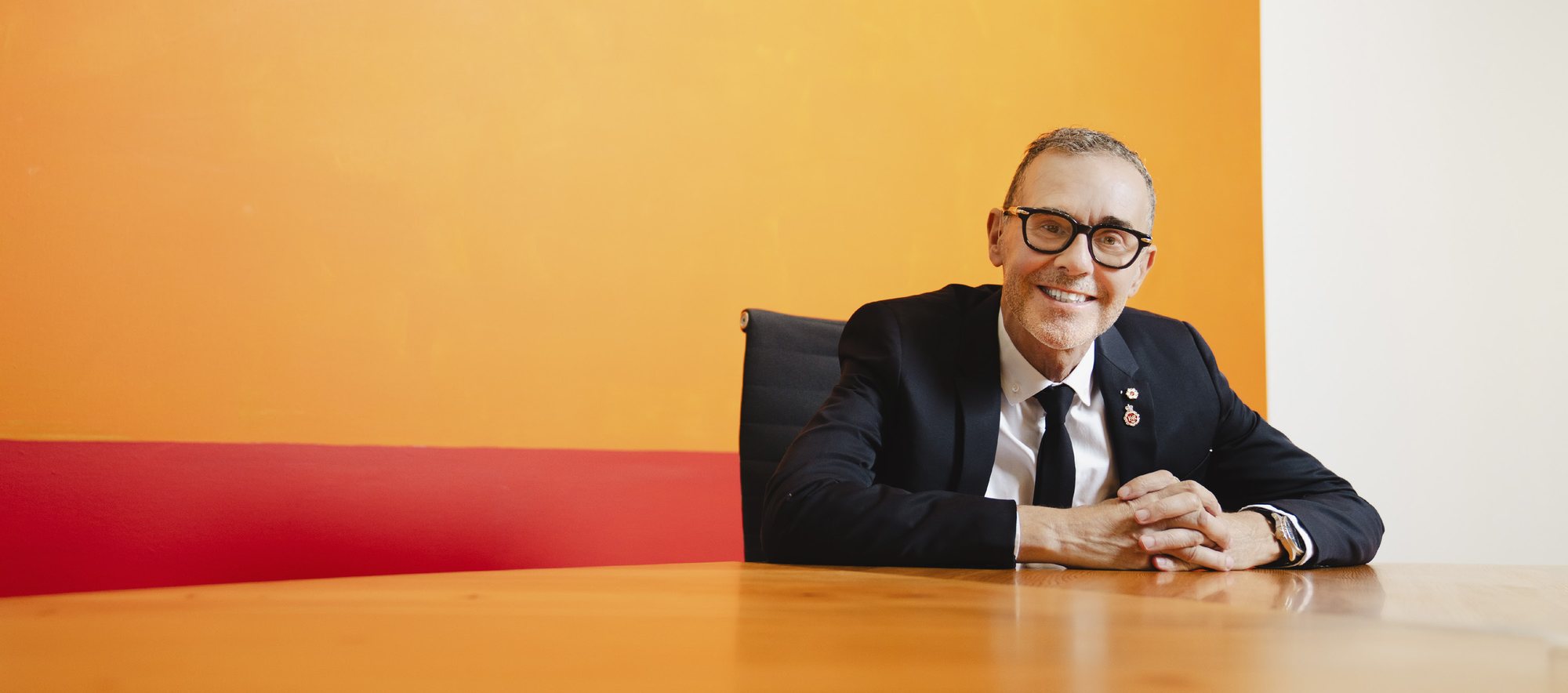
Bob Rennie casually wearing his favourite Paul Smith multicoloured plaid over-shirt.
Instead of the honorary diploma they had planned to present, the school awarded him the Grade 12 diploma he had earned decades earlier. Just days before, Emily Carr University of Art + Design had presented him with an honorary doctorate. Rennie has also been presented with an honorary doctorate at Adler University. He still smiles at the irony that his high school diploma arrived after his doctorate. The story says less about credentials than about curiosity. Rennie never stopped learning. Long before he understood markets, he understood that a home represents security a neighbourhood offers belonging, and a city embodies possibility.
Perhaps that is the clearest measure of Bob Rennie’s career. It has never been defined solely by the buildings he helped bring to market, but by an enduring fascination with people—their aspirations, their decisions and the communities they create.
PERSPECTIVE
Learning that security is something we build.
The moments that shape a life rarely seem important while they are happening. Their meaning emerges only years later, when scattered experiences reveal a pattern. Looking back, Bob Rennie’s early years in East Vancouver feel less like a prelude than the foundation for everything that followed.
That outlook distinguished him from many of his contemporaries. He wasn’t simply marketing buildings; he was helping people imagine the neighbourhoods and the lives they hoped to live inside them. It would also carry him far beyond real estate, into museums, galleries and conversations about history, identity and social justice, revealing a man whose influence extends well beyond the skyline that bears his imprint.
He has spoken openly about growing up in a home where stability could never be taken for granted. His parents’ relationship was turbulent, and during his teenage years his mother left several times, sometimes taking the furniture with her. It taught him early that security is not something you inherit—it is something you build.
RECOGNIZING PATTERNS
Three months before completing Grade 12 at Vancouver Technical Secondary School, Rennie left school. His education, however, did not end there. He applied for both his real estate and bartender’s licence. The real estate application came back first.
Understanding markets meant understanding people.
By the time Bob Rennie had become one of Canada’s most influential real estate marketers, Vancouver was undergoing a profound transformation. A city once admired primarily for its setting was becoming an international destination for investment, immigration and ambitious urban development. From his vantage point, Rennie watched neighbourhoods reinvent themselves while helping developers understand not simply what buyers wanted, but
Vancouver became his classroom. Its neighbourhoods taught him how communities evolve. Business taught him risk and discipline. Politics revealed the complexities of leadership. Above all, he learned to read people, understanding that decisions are driven as much by emotion as by logic, and a heavy reliance on data.
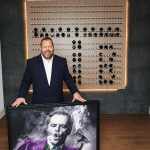
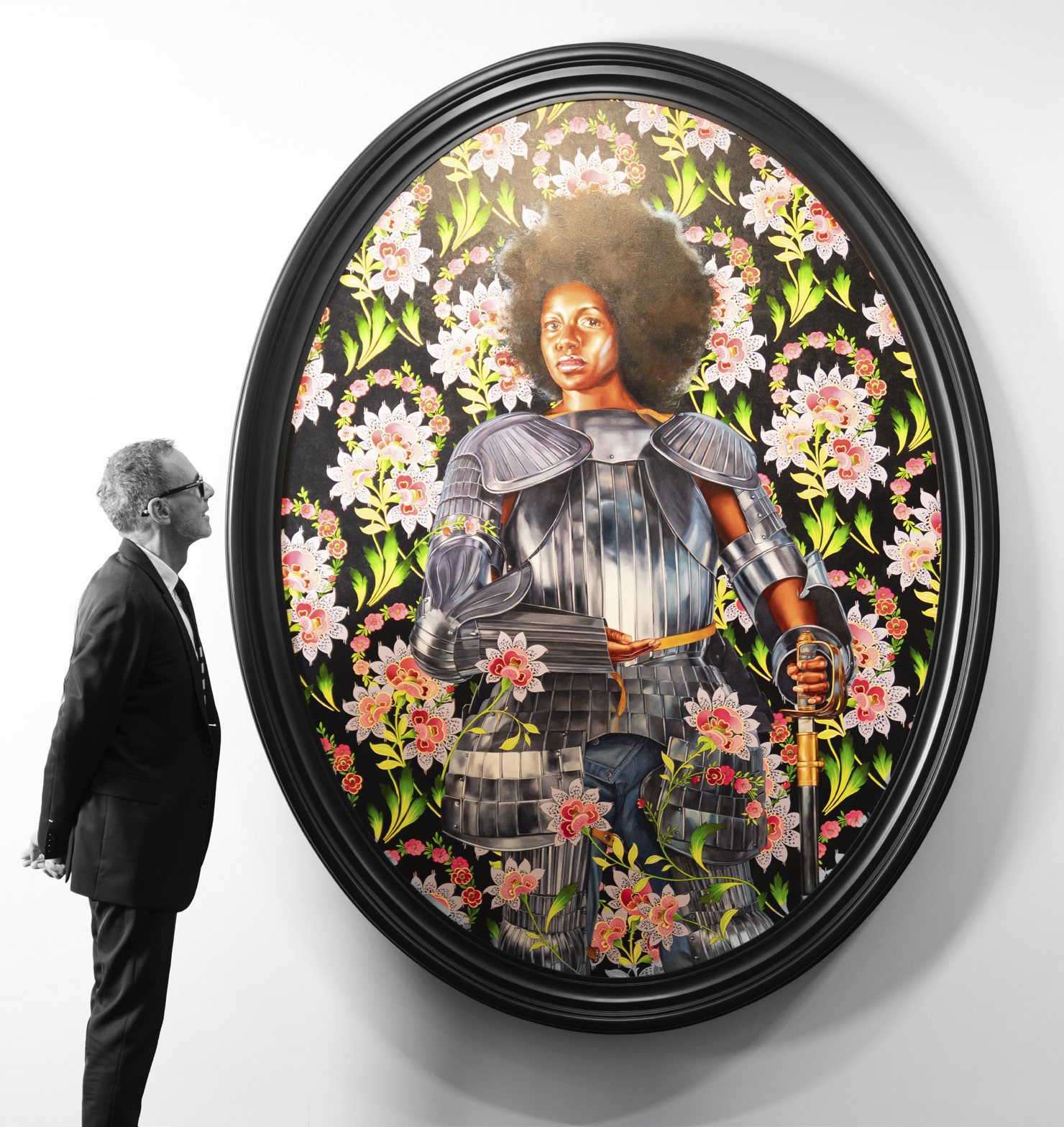
Bob Rennie admires Kehinde Wiley’s Portrait of Nelly Moudime, a striking reinterpretation of classical European portraiture.
Sponsored Ads





ARTI-FACTS
why they were willing to invest in communities that existed only on architectural drawings. His concept helped refine, professionalize and popularize the pre-sale in Vancouver at a time when the city was undergoing a dramatic transformation.
Collecting art became an act of listening.
Spend enough time with Bob Rennie and your attention begins to drift from the conversation to the walls around him. The paintings are not displayed as trophies or symbols of wealth. They feel like chapters in an ongoing conversation about history, identity and the stories societies choose to remember.
Throughout our conversation, Rennie spoke about housing not as a commodity but as an interconnected system. Land, financing, construction costs, municipal approvals and consumer confidence were inseparable, each influencing the next. “You can’t just do five sides of a Rubik’s Cube,” he says, “you need all six to complete
One work, in particular, demands a second look. At first, it resembles an American flag. Then the familiar markers disappear. The field is black. The stars are
To describe his role as marketing alone… misses the larger story.
the puzzle.” Bob’s views were shaped less by ideology than by decades of watching markets respond to economics—and to human nature.
gone. Created by the late American artist Barkley L. Hendricks, it is a painting Rennie returns to often— not for its rarity, but for the questions it continues to ask about identity, representation and belonging.
That perspective has made him a prominent voice in British Columbia’s housing debate. Rather than offering political prescriptions, he asks practical questions. What happens when approvals take longer than construction? How do rising costs reshape affordability? When do well-intentioned policies begin producing the opposite of their intended effect?
For Rennie, collecting art was never about possession. It became a way of understanding the world through artists whose voices had too often been overlooked. When I asked what his collection was worth, he paused, sighed softly and glanced to the side before replying, “There are seven people managing it.” Some collections simply outgrow easy valuation.
During our interview, Rennie spoke candidly about weakening confidence in the market, lengthy approval timelines and policies that, in his view, often overlook the economics of building new homes. Whatever the topic, he returned to the same conclusion: housing succeeds only when every part of the system works together.
He traces that evolution to a conversation in the early 1990s with painter Kerry James Marshall. Marshall told him, “If you go into a museum and don’t see a Black figure in any paintings, you think it doesn’t belong on their walls. I’m going to change that.”
It also explains why his work reached well beyond the projects marketed under Rennie. His career was built on understanding that buyers invest in more than buildings. They invest in trust—in a developer, in a neighbourhood and in the future those places promise.
The remark sharpened Rennie’s sense of purpose. He increasingly sought artists whose work challenged accepted histories and broadened the stories museums tell. African-American, Palestinian, Gender-Political and other artists exploring identity, memory and justice became central to a collection shaped as much by ideas as aesthetics.
That same way of looking at the world would eventually lead him beyond real estate into contemporary art, where another chapter of his life was quietly taking shape.
Among the works that has stayed with him is Nazis Murdered Jews, painted in 1936, years before the
Holocaust. This work hangs in the Jewish museum in New York on Fifth Ave today. Rennie sees it as evidence that artists often detect history’s first tremors before the rest of society recognizes them.
for Business Ethics at UBC’s Sauder School of Business. Together, these roles reflect a deeply held belief that strong communities are built on strong institutions—and that strong institutions require more than financial support. They require time, thoughtful judgment and an enduring commitment.
That philosophy eventually led to leadership roles with some of the world’s most respected museums and cultural institutions in Washington, London and Chicago. Rennie currently serves as Chair of Collectors at the National Gallery of Art in Washington, D.C. Last year, after nine years on the board of the Art Institute of Chicago, he concluded his service as Chair of Acquisitions and Trustee, and after a 17-year tenure, will step down as President of the Board of Trustees of the Tate Americas Foundation.
Education holds particular significance. Having followed an unconventional path himself, Rennie understands that talent often appears before opportunity. His support of scholarships at Emily Carr is rooted in that conviction: investing in potential before the rest of the world recognizes it.
Viewed this way, philanthropy is not separate from the career that came before it. It is an extension of the same instinct: identifying potential, investing early and believing that thoughtful decisions made today can improve lives tomorrow. Success, in Rennie’s view, carries responsibilities as well as rewards.
Along the way, he came to believe that collecting carries obligations as well as privilege. Great art, he argues, should not disappear into private vaults. It belongs in public conversation.
THE LONG VIEW
When Bob Rennie speaks about the future, he does so with little interest in prediction. After decades of watching markets rise and fall, he knows economies are cyclical, governments change course and cities continually reinvent themselves. What matters most, he believes, is whether the institutions that give a community its character remain strong enough to outlast those changes.
Success becomes responsibility.
There comes a point in many successful lives when the questions begin to change. People stop asking how the business was built and begin asking what it can do for others. Our conversation gradually shifted away from markets and toward community. For Rennie, giving back was never presented as the reward for success. It was simply the next responsibility.
That belief has shaped much of his life beyond real estate. Rennie has devoted years to museums, hospitals, universities and cultural organizations, seeing them not as separate commitments, but as a continuation of the same work. Building a city, he believes, does not end when construction is complete. It continues through education, culture and the institutions that hold communities together.
The remark is understated, especially from someone whose professional accomplishments could easily dominate the conversation. Instead, he speaks about the institutions that matter most: health care, education, public service and the arts. It is here, more than in business, that his priorities become clear.
At one point our conversation turned to fellow Vancouver businessman Brian Jessel. Rennie spoke warmly of Jessel’s generosity and civic leadership, describing him as someone woven into the fabric of the city. It was intended as a tribute, but it also revealed something about Rennie himself. He measures success less by what someone has built than by what they have contributed.
His commitment to community extends well beyond business. In addition to serving as Vice- Chair of the VGH & UBC Hospital Foundation, he recently joined the boards of the Vancouver International Film Festival and the Vancouver Police Foundation, while also serving as Chair of the Advisory Board for the Peter P. Dhillon Centre

As our conversation drew to a close, one thought lingered. Responsibility is a choice we make every day. Legacy is history’s decision.
BEYOND THE SKYLINE
Legacy
Leaving Bob Rennie’s home, I realized I had spent remarkably little time thinking about real estate. The skyline that made him famous had faded into the background, replaced by something more enduring: the impression of a man whose influence reaches well beyond the buildings associated with his name.
His legacy will not be measured only in towers or neighbourhoods, but in the artists he championed, the students he encouraged and the people whose lives he quietly influenced. Cities are built with steel, concrete and glass, but they are remembered through those who help shape the lives within them.
As our afternoon drew to a close, Bob reached for a small concertina-folded booklet that fit neatly into the palm of my hand. Inside were brief reflections gathered over a lifetime. Handing one to each of us, he smiled. “Something to carry with you always.” Then, with impeccable timing, he added, “My thing with small brochures is… how can I get one into every woman’s purse?” The room filled with warm laughter—the kind that comes only after hours of genuine conversation.
Driving home, I opened the booklet again. It seemed to capture the man who had given it: thoughtful, unpretentious and quietly generous. It was more than a keepsake from an interview. It was a reminder that what stays with us is rarely the grand gesture, but the small kindness, the shared laugh or the thoughtful words that return long after the moment has passed.
One day, today’s skyline will simply become tomorrow’s backdrop. Bob Rennie’s fingerprint will remain part of Vancouver’s story, but his lasting legacy will be found in the people he inspired, encouraged and believed in. In the end, that is the kind of architecture that endures. T
“My legacy now?
Only history will decide.”