Sponsored Ads








PARADISE, Twice Discovered
From the desert of Todos Santos to the Sea of Cortez
Story by: Jim Murray Photos by: Shahaab Oshidary
TCoastline around Isla Espíritu Santo, near La Paz, on the
here is a point in travelling when experience begins to alter expectation. Linda and I have been fortunate enough to stay in beautiful hotels and visit remarkable places, and over time you inevitably develop a certain immunity to the vocabulary of luxury: bigger rooms, finer linens, more elaborate spas, longer wine lists. All are pleasurable, certainly, but abundance alone eventually becomes less interesting. What becomes more interesting is restraint.
Sea of Cortez.
I found myself thinking about that at Paradero Todos Santos, although not immediately. At first, Linda and I were simply trying to absorb the landscape. Baja California Sur has a geographical severity that photographs don’t quite prepare you for. Desert runs toward ocean, cactus rises against mountains and the Pacific appears almost implausibly blue beside a landscape so conspicuously short of water. There is very little softness to hide behind, yet the cumulative effect is strangely calming. The light has something to do with it. Shapes become sharper, shadows stretch across the ground and the desert changes character throughout the day until late afternoon, when its hard edges begin to soften.
Paradero doesn’t attempt to correct any of this. It allows the desert to remain the desert. Much resort architecture is fundamentally an act of separation: we travel somewhere exotic and then construct walls, gardens and climate-controlled rooms to protect ourselves from the very place we came to experience. Paradero takes almost the opposite position. Its sand-toned walls and low concrete forms seem to rise from the earth; still water catches the enormous Baja sky; cactus gardens feel like extensions of the landscape. There is an almost monastic quality to the architecture, nothing especially anxious to impress you, and Linda and I found ourselves responding to that restraint.
The longer we stayed, the more we appreciated its confidence. Paradero doesn’t constantly remind you that you are somewhere special. It leaves enough empty space for you to discover that yourself.

LEARNING THE RHYTHM OF THE DESERT
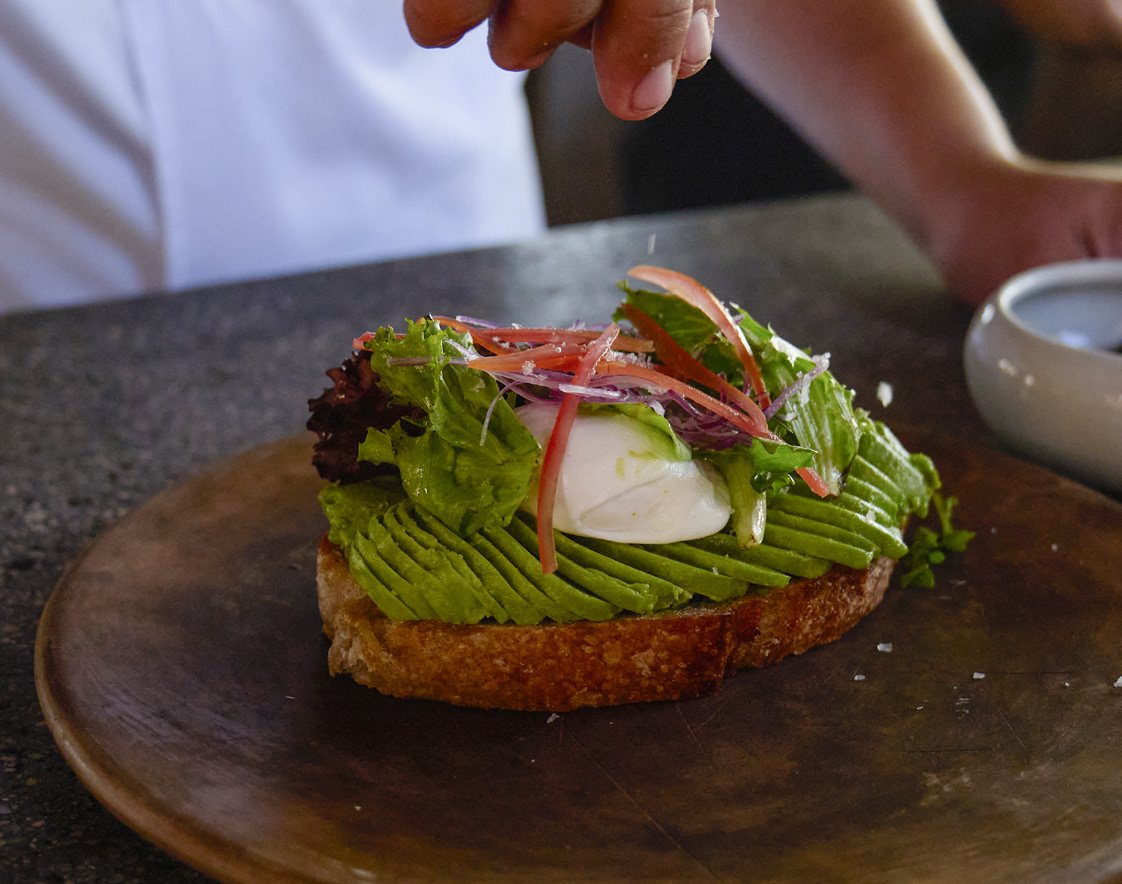
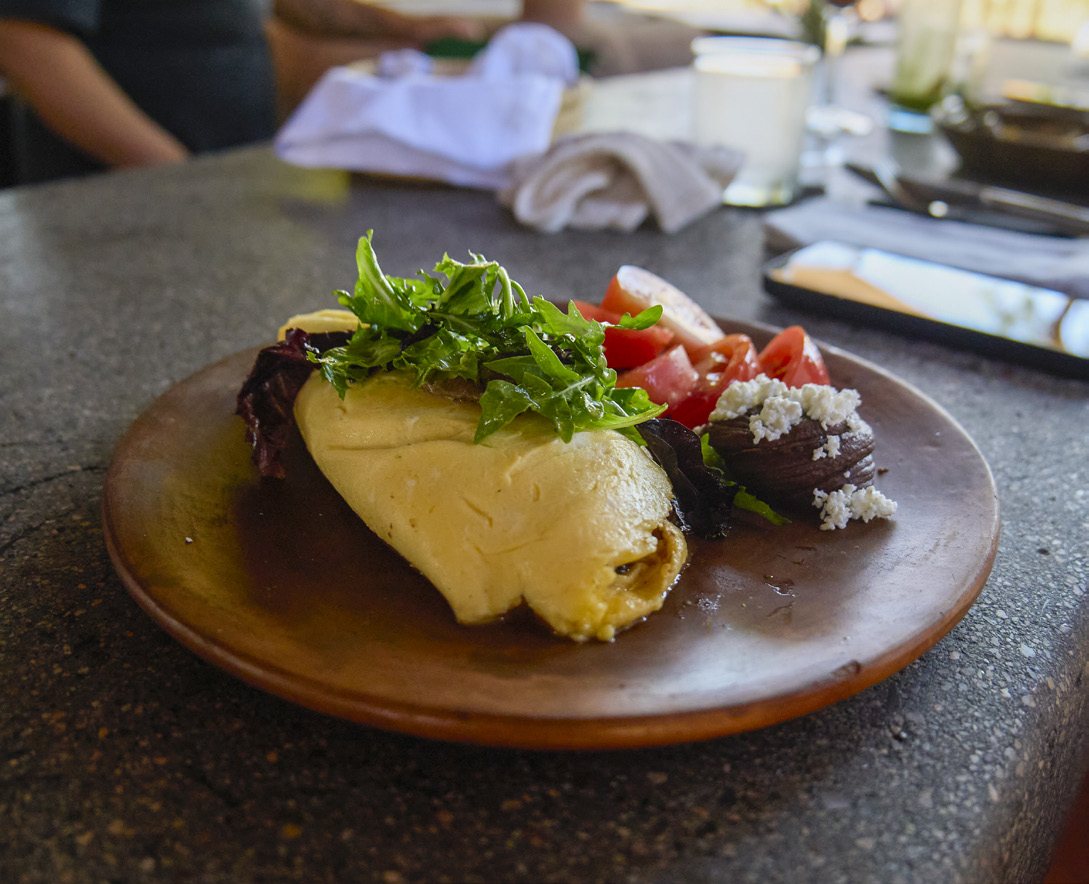
Left: Avocado toast with poached egg garnished with thin strips of red vegetables, fresh herbs and greens, Right: Mushroom omelette with bean purée, Ocosingo cheese and fresh herbs.
Something subtle happens after a day or two: your attention changes. You notice the shadow of a cactus moving across a wall, the heat lifting as afternoon becomes evening, the silence between conversations. Breakfast lasts longer than it normally would. Dinner is no longer something fitted efficiently between activities. You sit longer, look around more, and even the telephone begins to seem vaguely intrusive.
The same tension between refinement and authenticity extends into Todos Santos itself. The town has galleries, artisans, restaurants and markets, contemporary work alongside traditional Mexican craft, with colour and creativity around corners where you don’t necessarily expect them. Yet it still feels like a town with a life independent of those who have travelled there to discover it.
People have been travelling to escape the tyranny of their schedules for centuries. What’s unusual is finding a hotel disciplined enough not to fill the resulting emptiness. The rooms and public spaces reinforce that feeling. The boundary between inside and outside seems deliberately uncertain, with architecture framing the landscape rather than shutting it out. Your eye is continually drawn beyond the building—to desert, mountain, cactus and sky. It is a subtle form of hospitality because the property itself gradually recedes from the experience.
That matters because tourism has an unfortunate habit of consuming precisely the qualities that made a destination desirable. The beautiful becomes fashionable, the fashionable becomes popular and eventually the original place can disappear beneath everyone’s enthusiasm for it. Todos Santos is not immune, but there remains an appealing conversation between old and new, local and international, cultivated and slightly rough around the edges.
For several days, this was our Baja: earth and stone, cactus and good food, long shadows and an almost improbable amount of sky. We had begun to understand its particular paradise. It wasn’t paradise in the conventional tropical sense. There was no attempt to make the desert behave like something it wasn’t. Its beauty came partly from absence—from the space between things and the silence surrounding them. We might easily have gone home believing we had found the Baja we came looking for, but then the journey changed direction and we went to sea.
Food follows much the same philosophy. Baja has developed a sophisticated culinary culture, but what appealed to Linda and me was how little the cooking seemed interested in proving it. Seafood, vegetables, herbs, citrus, smoke and fire belong naturally to the region’s culinary vocabulary, with ingredients allowed to retain their identity. There is a broader lesson in that: simplicity becomes interesting only when there is nowhere for mediocrity to hide.
THE SECOND PARADISE
leaving shore meant surrendering a certain amount of control. Modern boats have thankfully removed much of the danger and discomfort, but something of that psychological transition remains. You have left, and for the next several hours—or longer on an overnight voyage—the boat becomes the circumference of your world.
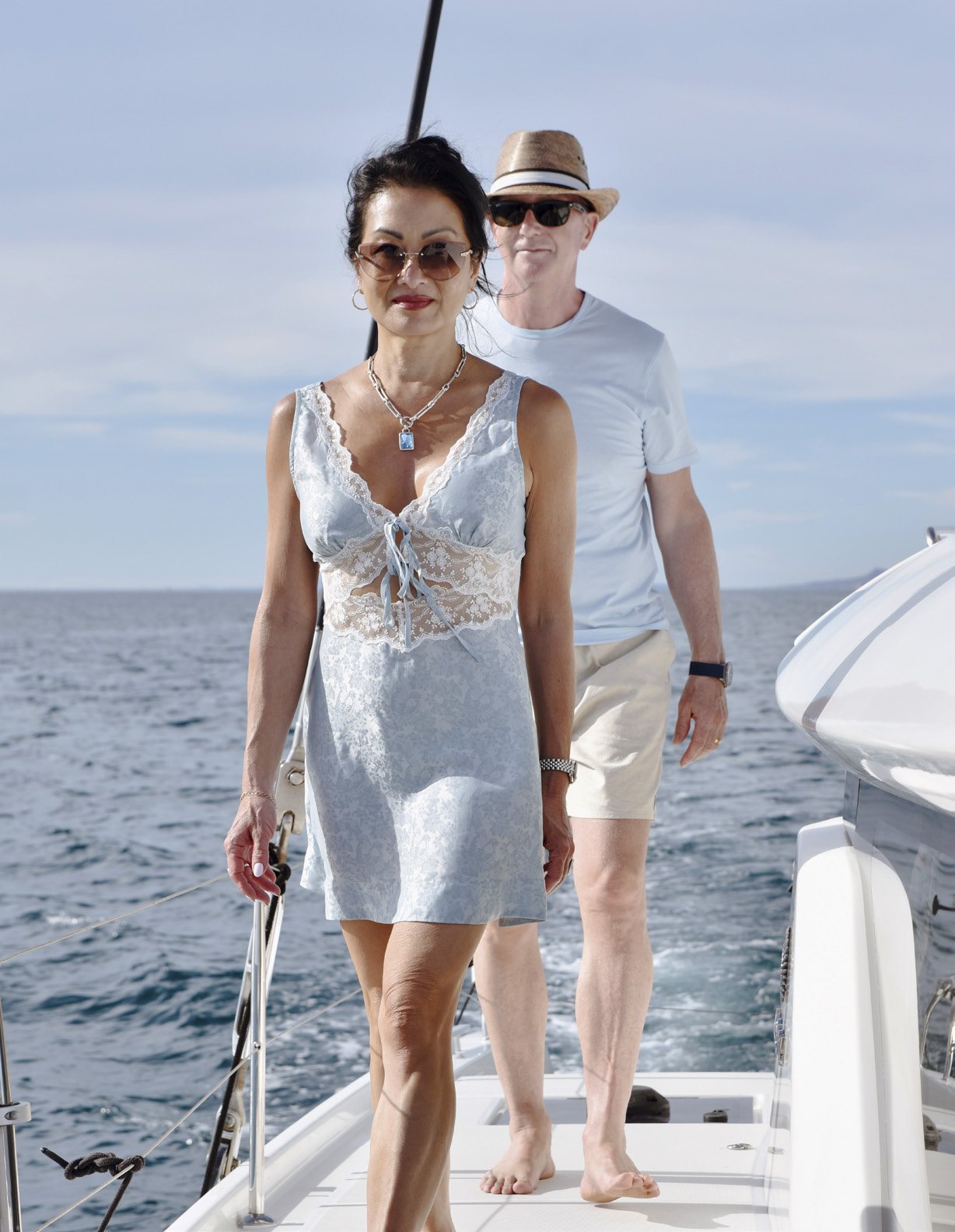
Jim and Linda far a-sea, dining on Paradero’s customized Lagoon 46 sailing catamaran.
The transition to the Sea of Cortez is almost cinematic. The ochres, browns and muted greens that had defined our days give way to water and light, while the intimate geometry of Paradero opens onto a horizon that seems to have no particular interest in ending.
We thought we had discovered our Baja paradise in the desert. Then the shoreline began to disappear behind us.
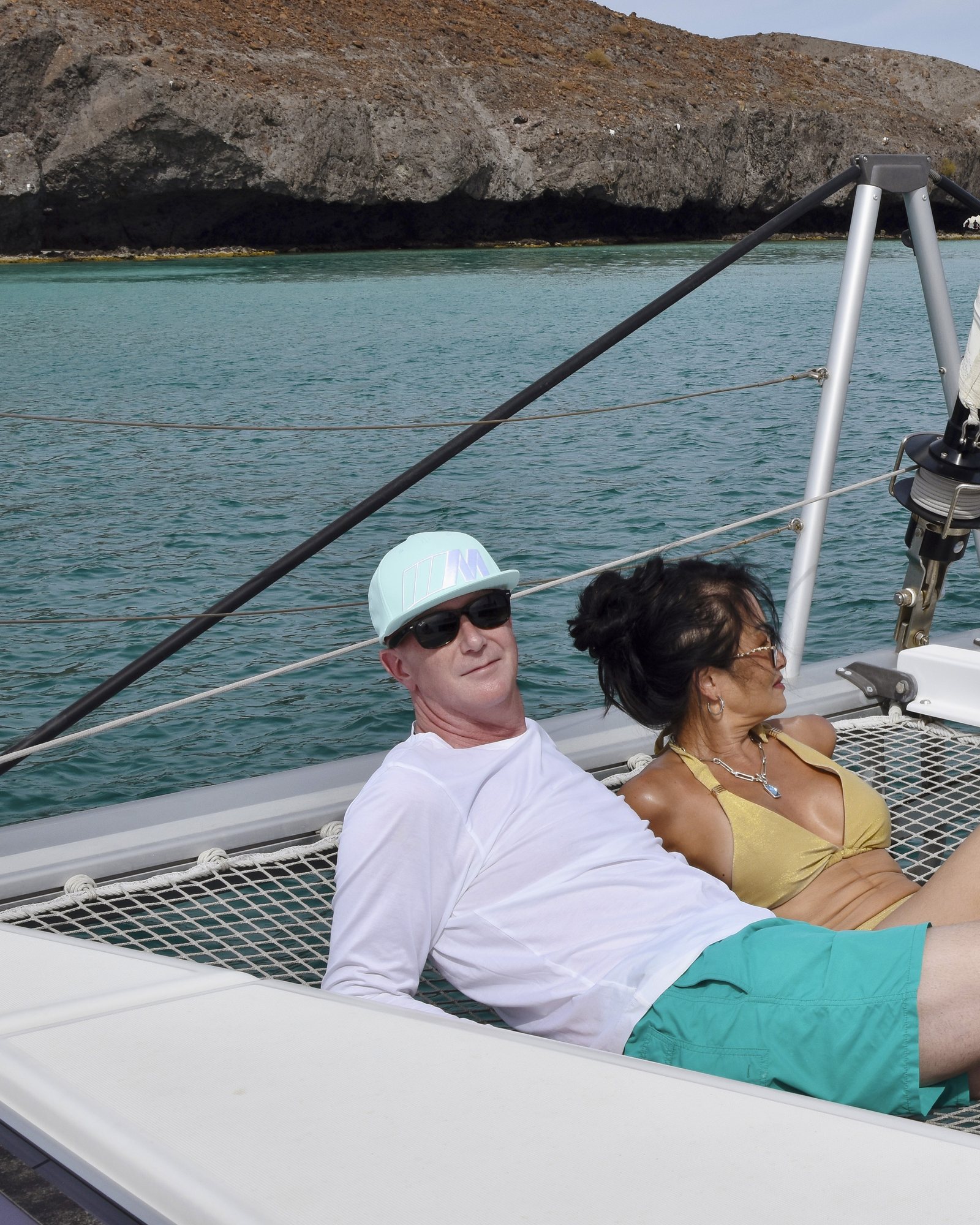
Waiting for us was Paradero’s customized Lagoon 46 sailing catamaran. At 46 feet, it has four private en-suite cabins, an interior living space and kitchen, open decks, and netted lounging areas at the bow. Those specifications are useful before you step aboard; once you do, they quickly become less interesting. Distance becomes more interesting.
Paradero has understood that the real indulgence aboard the catamaran isn’t simply what has been added, but what has been taken away. There is a captain, local experience guide, Paradero chef and mixologist. Written down, that sounds elaborate. Aboard, it has almost the opposite effect because the practical business of the day disappears. Food is prepared without your having to think about where to eat. A drink arrives without a journey to a bar. The boat changes course while you remain absorbed in the coastline. Someone who understands these waters notices what you might otherwise miss. Gradually, you stop organizing the day and begin inhabiting it.
There is a wonderfully satisfying moment when the shoreline begins to recede. Roads disappear first, then buildings, then the familiar evidence of other people’s schedules. The coastline becomes a narrow band separating water from sky, and the world left ashore seems suddenly rather complicated. Linda and I stood looking back, watching Baja rearrange itself from this new perspective.
Perhaps that is why sailing retains such a hold on the imagination. For thousands of years,


Sponsored Ads







BLUE WITHOUT END
Linda would notice something along the coast and draw my attention to it; at other times neither of us felt much need to say anything. Silence is comfortable when the view is doing the talking, and the older I get, the more I suspect genuine indulgence often looks remarkably simple.
The Sea of Cortez is not scenery in the conventional sense because you can enter it. The catamaran carries snorkelling, kayaking and paddleboarding equipment, while a dinghy can take guests toward remote stretches of shoreline. Longer voyages can include hiking and beach setups, and in-season there is the possibility of whale watching. Yet Linda and I came to appreciate something else: the temptation to convert every beautiful place into an itinerary should occasionally be resisted.
Food, for example, tastes different on the water. Perhaps hunger is sharpened by salt air and swimming, or perhaps a meal becomes memorable simply because of where you eat it. There is something wonderfully civilized about being aboard a sailing boat while a chef works nearby, the coastline visible beyond the deck and the gentle movement of the sea beneath everything. You hear water against the hull and feel the warmth of the deck underfoot. The formality has disappeared, but the quality hasn’t.
There is a modern compulsion to do destinations. We make lists, schedule excursions, photograph evidence and move efficiently toward the next experience. The Sea of Cortez rewards a less ambitious approach. Sometimes you simply sit. From the deck, mountains that initially seem barren change character with the light. Empty beaches appear between rocky outcrops and disappear again. The water moves through shades of blue that seem excessive even by the standards of travel writing, and eventually you stop asking what time it is.
Nothing felt particularly ceremonial. There was no performance of luxury, which allowed us to enjoy its substance. There is something rather wonderful about sharing a drink as the light changes over the Sea of Cortez and realizing that nowhere else requires your presence.
There is something particularly intimate about experiencing that with the person you know best.


THE VALUE OF ACCESS
Somewhere out there, with the Baja coastline becoming a distant edge between water and sky, I began thinking about how narrowly we sometimes define luxury. We tend to measure it in possessions: square footage, materials, brands, vintages and stars. Travel suggests another currency entirely—access.
It is the ability to be somewhere difficult to reach, to have time without obligation, to enter a landscape rather than merely look at it. It is leaving a shoreline behind without worrying about when you have to return, swimming with no crowded beach at your back, climbing aboard hungry and finding lunch waiting, then sitting beside the person you love while an immense piece of the world moves quietly around you. Those things are harder to quantify, but they are also harder to forget.
Paradero offers day and sunset journeys as well as private sixand eight-hour charters and overnight voyages. The catamaran can accommodate up to 12 guests privately and eight overnight. Those are the practical details. What stayed with Linda and me was moving between two landscapes that initially seemed opposite and discovering something curiously similar in each.
The desert and the sea have more in common than one might imagine. Both are immense and can be unforgiving; both reduce human presence to a more appropriate scale. Most importantly, both contain a great deal of emptiness, although one expresses it through earth and silence, the other through water and horizon. Perhaps that is why Paradero works so naturally in both. On land, the architecture frames desert, mountains and sky without competing with them. At sea, the catamaran does essentially the same thing, providing comfort, food, shelter and thoughtful service before turning your attention outward. One paradise is grounded in stone, earth and cactus; the other moves beneath you.
WHAT REMAINS
For travellers from Vancouver and Western Canada, perhaps this has particular resonance. We come from a landscape where mountains,
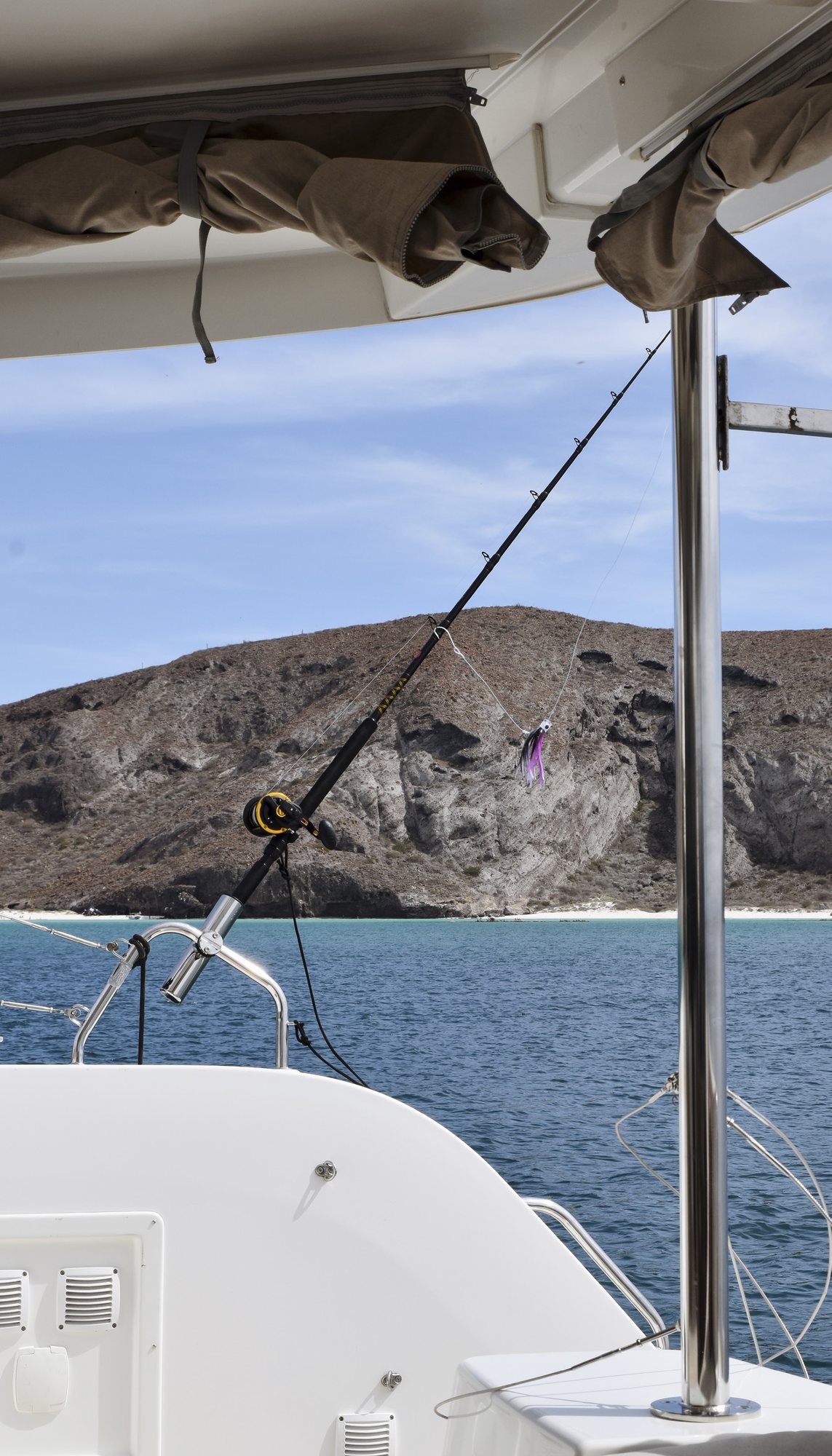
Jim and Linda enjoying unpolished Baja
Landscape.
“Perhaps the journeys that stay with us are the ones that
subtract something—noise, urgency, distraction, obligation.”
ocean and wilderness have always informed our understanding of beauty. We don’t necessarily need nature polished before we can appreciate it, and Baja isn’t polished, nor should it be.
and discovered the same idea expressed differently—less architecture, more horizon; less earth, more water; the same invitation to pay attention.
Travel is often sold as accumulation: the number of countries visited, restaurants booked and experiences collected. This journey left me thinking almost the opposite. Perhaps the journeys that remain with us are the ones that subtract something—noise, urgency, distraction, obligation—and leave enough room for us to notice what remains.
When Linda and I talk about the journey now, our memories don’t return as a catalogue of amenities. They arrive in fragments: morning light across concrete, cactus silhouetted against a vast sky, the pleasure of food that belongs to the landscape around it, the Baja shoreline becoming smaller behind us, water against the hull, the changing colour of the sea, sitting together as afternoon surrendered to evening. Looking toward land from the boat, the desert appeared completely different. The place we had just left—our first paradise—had become part of the horizon of the second, and that was when the two experiences became one.
For a few days, Linda and I found that kind of paradise in the desert of Todos Santos, in its silence, architecture, food and remarkable sense of space. Then we boarded a boat and found another one waiting on the Sea of Cortez. Two landscapes, each beautiful for almost opposite reasons; two interpretations of escape and two different ways of reminding us that the world is considerably larger than the portion of it we ordinarily occupy.
We had arrived in Todos Santos and found something increasingly difficult to find in contemporary travel: a place confident enough not to overwhelm its surroundings. Then we sailed into the Sea of Cortez
And somehow, they became one journey: paradise, twice discovered. T